Back
How exercise changes your brain
📘 Academic Vocabulary & Reading
🧠 Brain & Health
🏃 Exercise

Students explore the science of how physical activity reshapes the brain — working with an adapted New York Times article to build advanced academic vocabulary and close-reading skills.
Warm-up: movement and the mind
Learners discuss their own exercise habits and notice how activity affects mood, focus and energy — an accessible way into a science-heavy topic.
Reading: how exercise strengthens your brain
Students work through an adapted article by Dana G. Smith, covering new neurons, neurotransmitters and the ongoing scientific debate about brain cell growth. Comprehension tasks include true/false statements, cause-and-effect matching and ordering the steps of how exercise affects the brain.
Academic vocabulary in context
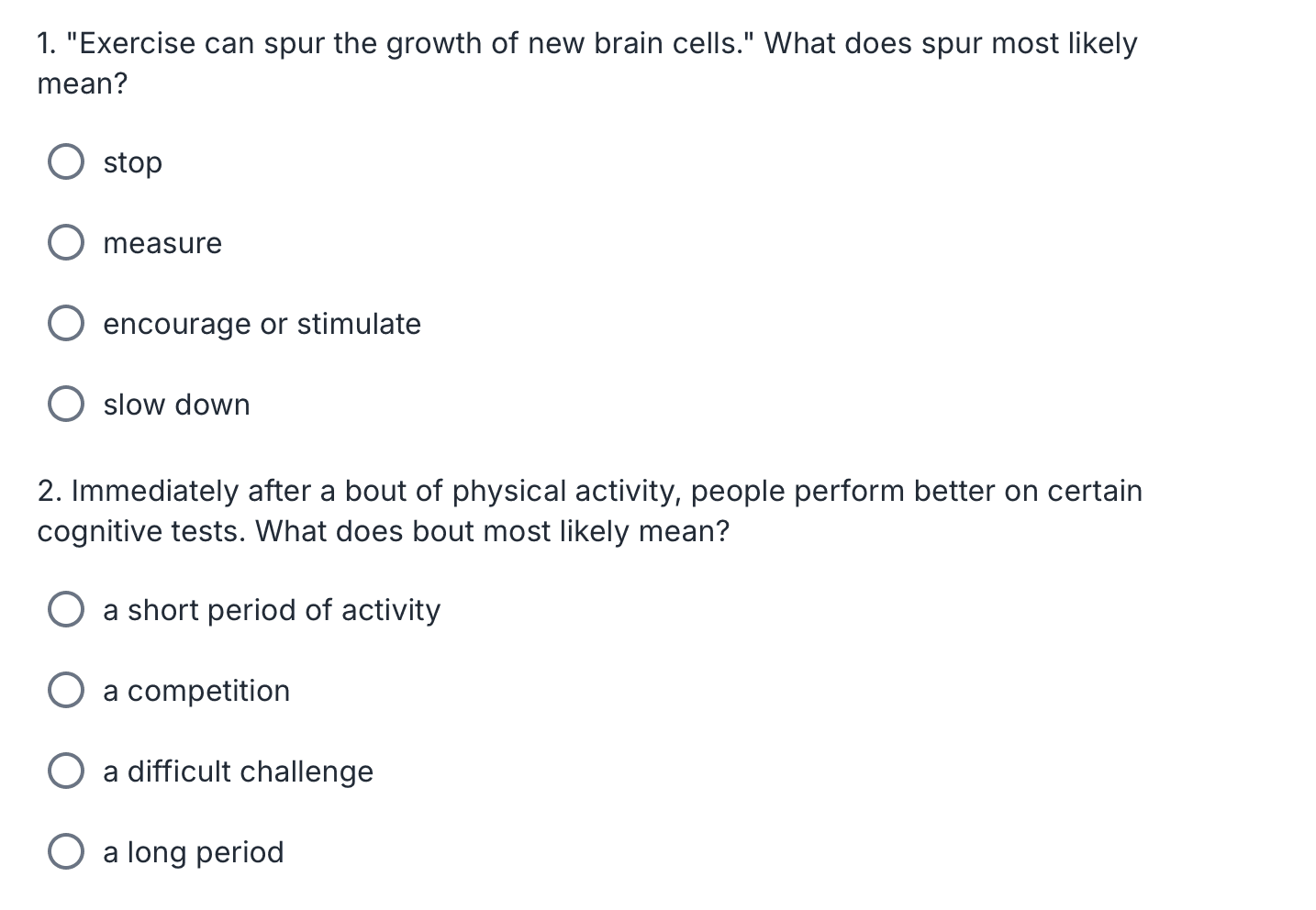
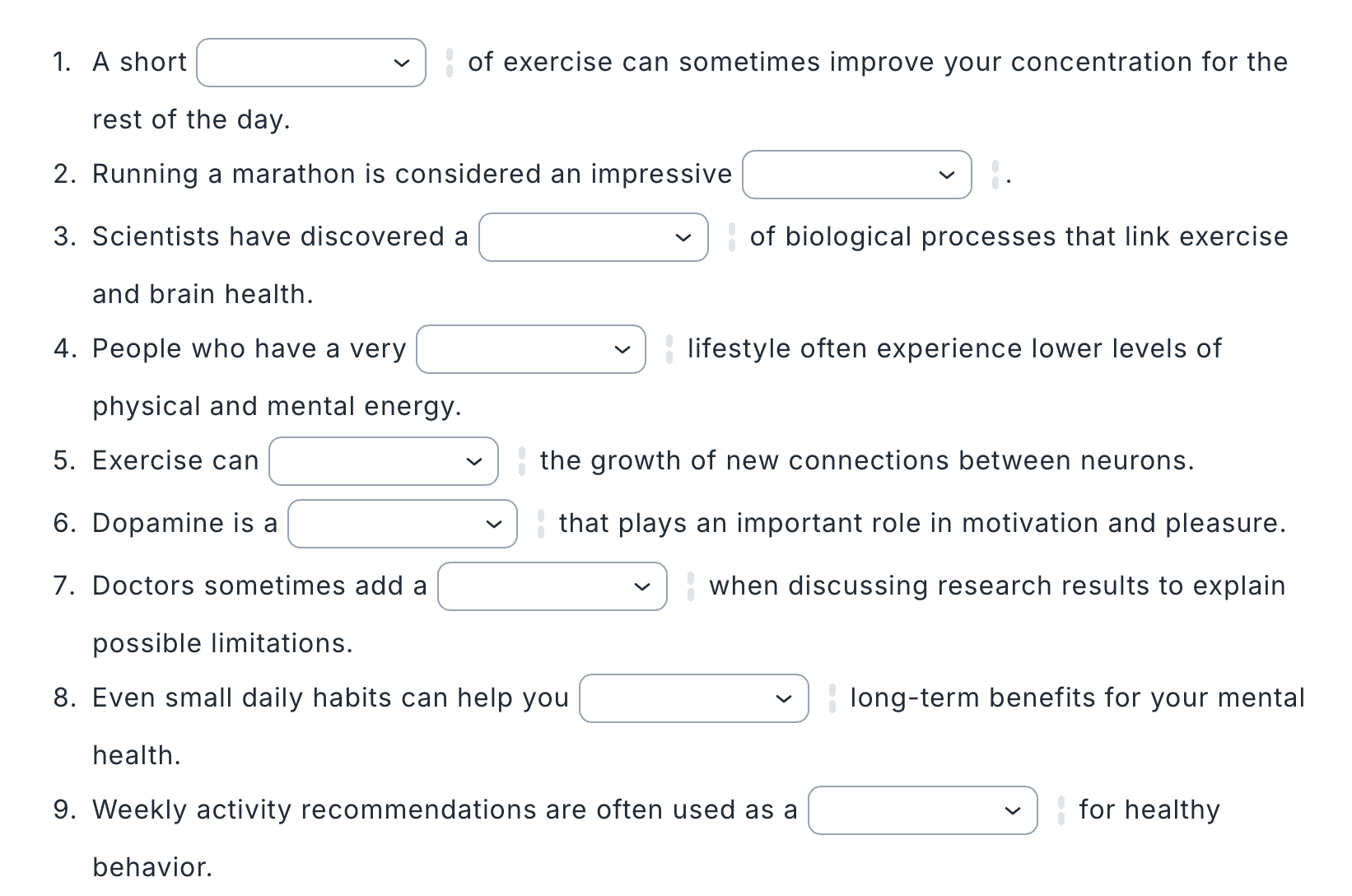
A rich vocabulary strand introduces advanced items — spur, feat, tantalizing, reap, sedentary, caveat, emerge — with word-in-context tasks that train students to infer meaning from academic prose.
Discussion and writing
Learners debate which exercise is best for the brain and whether schools and workplaces should require physical activity. Built-in homework includes a vocabulary-in-use section and a writing task where students play a "brain coach" giving evidence-based recommendations, with AI-assisted assessment.