6 Quizlet Alternatives for Language Teachers (2026)
Quizlet made flashcards easy, and for vocabulary it's still a good tool. But many of its study modes now need a paid plan, and flashcards on their own don't teach a language. Learners also need the words in a text, in a dialogue and in their own sentences.
Here are six alternatives, for teachers and for students' self-study.
The list at a glance
- edio.ai: vocabulary practised inside your lessons and in a personal dictionary
- Anki: free spaced repetition, for serious self-study
- Knowt: a Quizlet-like app that imports Quizlet sets
- Brainscape: flashcards with confidence-based repetition
- Memrise: a language app for learners
- Wordwall: vocabulary games and printable activities
1. edio.ai: vocabulary inside the lesson
This is our product, so read this one with that in mind.
In edio.ai, vocabulary isn't a separate set. Each lesson has word cards with pictures and audio, and the same words come back in the reading, the exercises and the speaking tasks. During a live lesson, you can send a word to your students, and they save it to their personal dictionary.
Students then practise their words in their account with four exercise types: flashcards, listening, matching words with translations, and typing a word from its translation. They see how many words they learned today and their best result so far.
- Best for: teachers who want vocabulary taught and practised in the same place
- Free option: a 7-day free trial
2. Anki: free spaced repetition
Anki is the classic spaced-repetition app: it shows each card again just before you would forget it. It's free on computers and Android (the iPhone app is paid), and there are shared decks for many languages. It's powerful but plain, so it suits motivated adults more than young learners.
- Best for: students' long-term self-study
- Free option: yes, except the iPhone app
3. Knowt: closest to Quizlet
Knowt feels like Quizlet: flashcards, learn mode, tests and matching. It can import a Quizlet set from its link, which makes switching easy, and its AI can make flashcards from notes.
- Best for: moving existing Quizlet sets
- Free option: yes, with limits on AI features
4. Brainscape: confidence-based repetition
Brainscape asks students how well they knew each card and repeats the weak ones more often. There are ready-made decks for many languages.
- Best for: self-study with ready-made decks
- Free option: a free plan
5. Memrise: a language app for learners
Memrise is a language-learning app rather than a teacher's tool. It mixes vocabulary with short videos and conversation practice, which makes it a good extra for students between lessons.
- Best for: students' self-study between lessons
6. Wordwall: vocabulary games
Wordwall turns a word list into games such as match up, anagram and quizzes, which can be played on screen or printed. See how it compares with edio in edio.ai vs Wordwall.
- Best for: vocabulary games in class
- Free option: a free plan with a limited number of activities
How to choose
- Your students study alone and want free flashcards: Anki or Knowt.
- You want to keep your Quizlet sets: Knowt.
- You want games for class: Wordwall.
- You want vocabulary taught in lessons and practised afterwards, with progress you can see: edio.ai.
Flashcards help words stick, but words are learned in use. Whatever tool you choose, bring the same words back in a text, a dialogue and a speaking task.
Frequently asked questions
What is the best free alternative to Quizlet?
Can I import my Quizlet sets into another app?
Is Quizlet good for learning a language?
How do students practise vocabulary in edio.ai?
Related posts
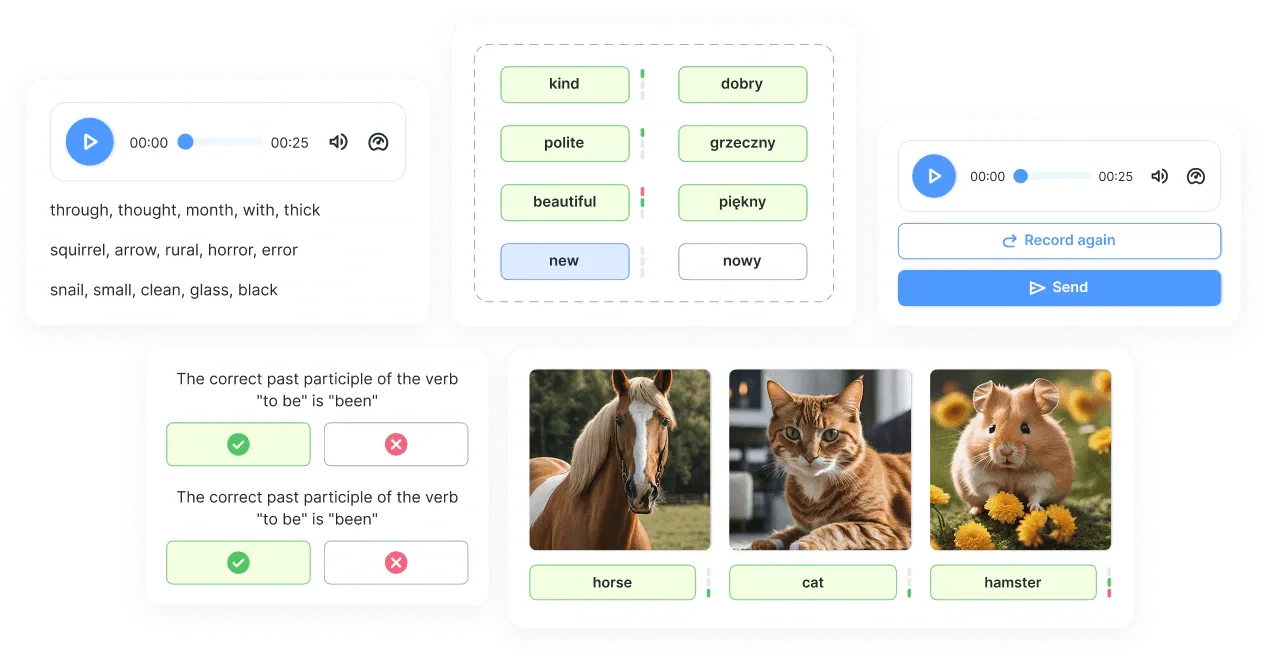
8 Kahoot Alternatives for Language Classes (2026)
Eight Kahoot alternatives for language classes, from self-paced quizzes to team games on one screen, with what each one is best for.
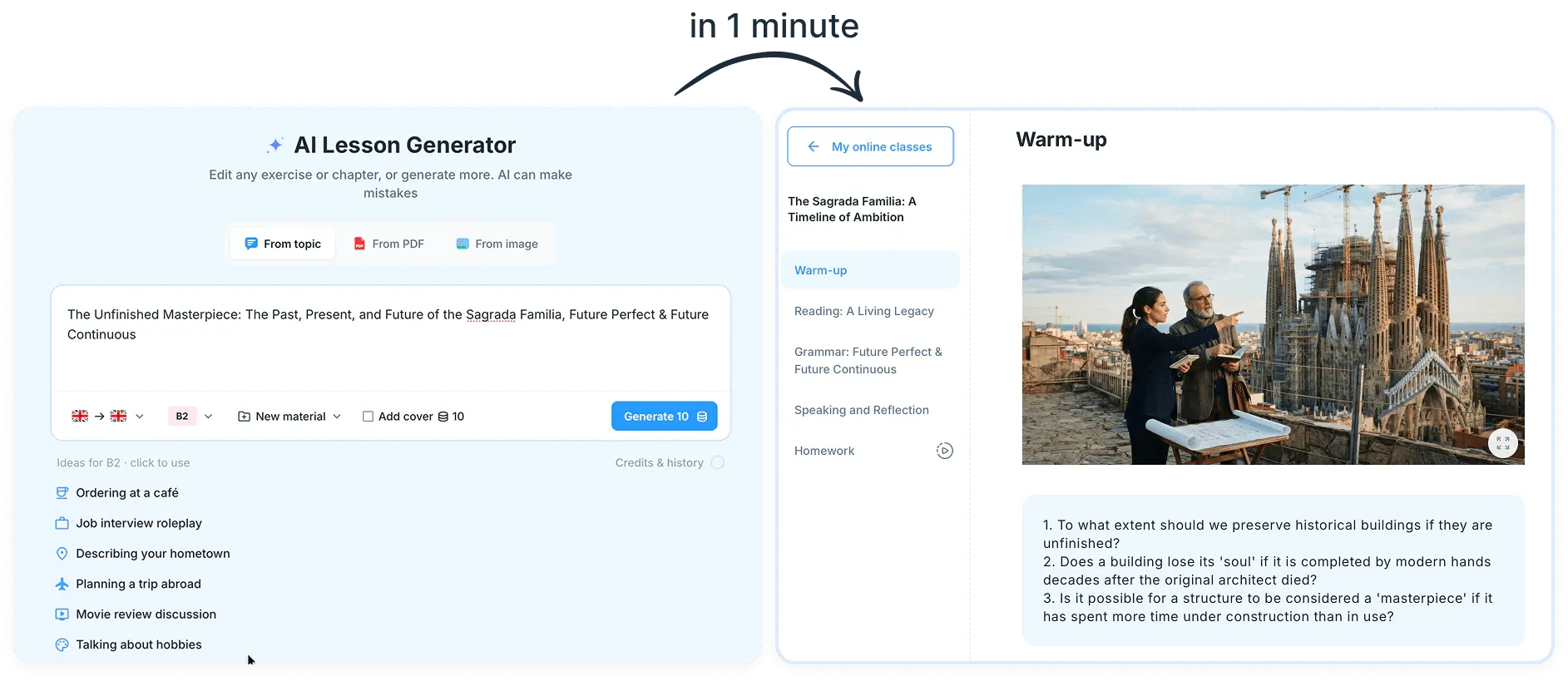
8 Best AI Tools for Language Teachers (2026)
Eight AI tools that language teachers actually use, from chatbots to lesson generators, with what each one is best for and which have free plans.
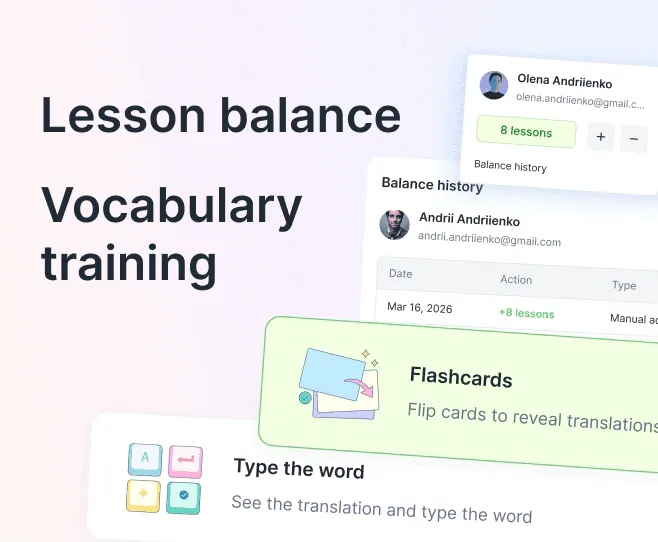
New features: vocabulary training, lesson balance & improved lesson search
Better learning for students and easier management for schools with the latest edio update.