Can you cross a city without going outside? The present simple passive with am, is and are
About this lesson
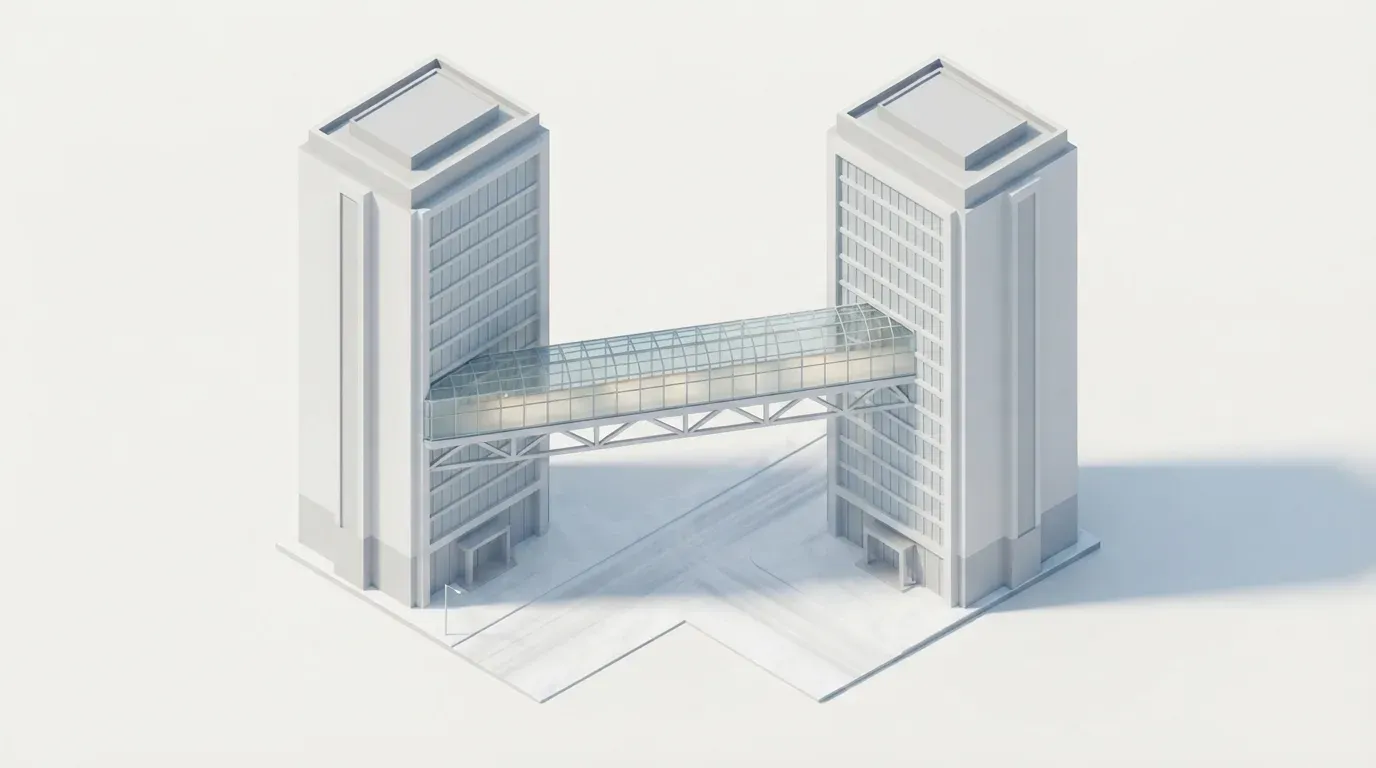
This B1 ESL lesson plan teaches the present simple passive through the Minneapolis skyway, a network of enclosed bridges and hallways that links about 80 downtown blocks.
- Grammar
- Am, is or are + past participle for every person (The buildings are linked by skyways.), negatives and questions (Are the skyways heated?), irregular participles and by + the doer only when it matters.
- Topic
- How downtown Minneapolis is connected above the street, with words such as pedestrian, hallway, suburb and shortcut.
- Activities
- Episode notes to read, a winter race through the skyways and a message from St. Paul to hear, self-checking drills, a directions chat and open boxes.
What's inside
Chapter 1Warm-up: brrr, it's cold out there!
Chapter 2Let's read: a city above the street
Chapter 3Let's listen: a race through the skyways
Chapter 4Grammar: The skyways are heated!
- Study the scheme: the present simple passiveGrammar schemeTry it
- Choose the correct optionChoose the optionUnlock
- Fill in the gaps: use the present simple passiveFill in the gapsTry it
- Fill in the table: past participles and the present simple passiveFill in the tableUnlock
- Fill in the gaps in the present simple: active or passive?Fill in the gapsUnlock
- Choose the correct answer: which sentence is correct?QuizUnlock
Chapter 5Let's talk: lost in the skyways
Chapter 6Homework
- Match the words and the meaningsMatchUnlock
- Unscramble the wordsAnagramUnlock
- Fill in the gaps with the lesson's wordsFill in the gapsUnlock
- Sort the words into the correct columns: people, places or verbs?Sort into columnsUnlock
- Choose the correct option: new sentencesChoose the optionUnlock
- Fill in the gaps: make the present simple passiveFill in the gapsUnlock
- Put the words in the correct orderUnjumbleUnlock
- Choose the sentence with the same meaningQuizUnlock
- Drag the words into the gaps: Jade answers PenelopeDrag and dropUnlock
- Choose the correct option: a visitor guide to the skywaysChoose the optionUnlock
Vocabulary
12 words and phrases from the lesson, each with a picture and audio in edio.
+9 more with pictures and audio in the lessonMore words
- downtown
- pedestrian
- hallway
- developer
- suburb
- architect
- shopper
- shortcut
- hotdish
Grammar: the present simple passive
The present simple passive puts the thing first and the doer second, or leaves the doer out: The buildings are linked by bridges. It is am, is or are + the past participle. A city connected above its streets shows why the thing can matter more than the doer: nobody asks who heats the skyways.
The skyways are heated!
The present simple passive: am / is / are + past participle. Use it when the thing or the action matters more than the doer.
Am, is or are + past participle
Be changes with the subject, and the participle stays the same: I am invited, it is heated, they are invited. Negatives add not: It isn't heated. Never drop be or use the base form: The buildings are connected, not The buildings connected, and are used, not are use.
am / is / are + past participle
| Person | Positive | Negative | Question |
|---|---|---|---|
| I | I am (I'm) invited. | I'm not invited. | Am I invited? |
| you | You are (you're) invited. | You aren't invited. | Are you invited? |
| he | He is (he's) invited. | He isn't invited. | Is he invited? |
| she | She is (she's) invited. | She isn't invited. | Is she invited? |
| it (the skyway) | It is (it's) heated. | It isn't heated. | Is it heated? |
| we | We are (we're) invited. | We aren't invited. | Are we invited? |
| they | They are (they're) invited. | They aren't invited. | Are they invited? |
be + past participle, every time
Don't forget be: The buildings are connected by bridges (not: The buildings connected by bridges). Use the past participle, not the base form: It is built (not: It is build). The skyways are used (not: are use). One person or thing: is (but I am, you are). Two or more: are.
Regular and irregular participles
Regular verbs add -ed or -d: linked, entered, used, heated. Irregular verbs have their own participle: Skyways are built above the street. The skyways are kept warm in winter. Darius is known for his sound effects. Set doesn't change: The hours are set by each building.
| Verb | Past participle | Example |
|---|---|---|
| link, enter, use, heat | + -ed or -d: linked, entered, used, heated | The buildings are linked by skyways. |
| build | built | Skyways are built above the street. |
| keep | kept | The skyways are kept warm in winter. |
| make | made | Hotdish is made in one big pan. |
| see | seen | Footnote is often seen on the mixing desk. |
| know | known | Darius is known for his sound effects. |
| set | set (no change) | The hours are set by each building. |
Questions and short answers
Questions start with am, is or are, then the subject and the participle: Are the skyways heated? Yes, they are. Is the first skyway used today? No, it isn't. With a question word and by: Who is each skyway owned by?
Am / Is / Are+ subject+ past participle?
Are the skyways heated? Yes, they are.
Is the first skyway used today? No, it isn't.
Who is each skyway owned by? The buildings it connects.
Active or passive, and when to add by
Active puts the doer first: Each building sets its own hours. Passive puts the thing first: The hours are set by each building. Add by + the doer only when it's important, leave it out when it isn't (The skyways are heated.), and use with for a tool.
Active or passive?
Active: the doer comes first. Each building sets its own hours. Passive: the thing comes first. The hours are set by each building. Use the passive when the thing or the action matters more than the doer, or when you don't know the doer.
by + the doer, only when it matters
Add by + the doer only when it is important: Each skyway is owned by the buildings it connects. Leave it out when it isn't: The skyways are heated. (Who heats them? It doesn't matter.) For a tool, use with, not by: The letters are written with a pen (not: by a pen).
In the skyways and in the studio
- Downtown buildings are linked by skyways.
- Most skyway buildings are entered from the second level.
- In many elevators, the second floor is marked “SK.”
- Are the skyways heated? Yes, they are.
- The first skyway isn't used today. It's gone.
- Who are the mugs washed by this week? By Darius!
Common mistakes
The skyways are use every day.
The skyways are used every day.
be + past participle
The buildings connected by bridges.
The buildings are connected by bridges.
don't forget be
The skyway are heated.
The skyway is heated.
one thing: is
Is the bridges used at night?
Are the bridges used at night?
two or more: are
More lessons on this grammar: Passive voice lessons and exercises
Try the present simple passive exercises
Try them yourself: these are the same exercises your students do in edio.
What's in the lesson
- 19 auto-checked exercises
- 4 games
- 1 article
- 1 grammar scheme
- 1 set of word cards
- 2 audio clips
- 2 pictures
- 2 transcripts
The main objectives of this lesson are to:
- describe how a place works with am, is or are + past participle: Downtown buildings are linked by skyways. The skyways are heated and cooled.
- use irregular participles: Skyways are built above the street. Hotdish is made in one big pan. Darius is known for his sound effects.
- ask and answer passive questions: Are the skyways heated? Yes, they are. Who is each skyway owned by?
- add by + the doer only when it matters, and with for a tool: The hours are set by each building.
Lesson 5 opens Cities of tomorrow, unit 2 of English B1.2 · Changemakers, and starts the course's run of passives. It builds on the past participles learned with the present perfect in A2.2 lessons 1 and 2, and on made of and made from in A2.2 lesson 19. Lesson 6 moves the passive into the past with was and were. In a skyway system, what matters is what is heated, linked and owned, not who does it, so the passive fits naturally.
Students spin a wheel of questions about cold days, bridges and getting lost, then learn twelve words, from link and enter to hotdish, with pictures and audio. They read the episode notes on the skyways, from the elevator button marked “SK” to the Crystal Court, then hear Jade race to the next skyway while Darius commentates and a listener, Penelope, describe St. Paul's skyways and her family's hotdish, both AI-voiced. Five self-checking drills follow the scheme; one is an active-or-passive gap-fill with the same verbs. In the speaking chapter, a friend named Lowell guides students to lunch through the skyways in a chat, and open boxes ask about their own town.
All ten homework tasks check themselves: four for the words, one of them a sort into people, places and verbs; a choice of forms; gaps that make the passive; word order; a quiz that turns active sentences into passive ones; Jade's answer to Penelope with words to drag in; and a visitor guide to the skyways.
- Grammar:
- present simple passive · am / is / are + past participle · passive questions · by + the doer
- Topic:
- Minneapolis · skyways · St. Paul · hotdish · Minnesota · cities · winter · Stories That Travel
Teaching tips
- Start with the mystery button: ask why an elevator in Minneapolis might say “SK” instead of “2”. Students read the episode notes to check, then underline every passive in that paragraph.
- Play the skyway dialogue twice: first for the facts (SK, heated and cooled, the oldest skyway), then for each passive. Students tap the desk at are linked, are entered and are washed.
- Turn the classroom into the drill: pairs say passive facts about it, such as The windows are opened every morning or The board is cleaned on Fridays, and the class guesses the doer.
- After the chat, map a route in your own town: students explain how two places are connected, what each building is used for and where it is entered: The library is entered from Main Street.
Liked it?
Teach the whole lesson in edio
32 exercises in 6 chapters, ready to teach. edio is an online platform for language schools and teachers: ready-made interactive lessons, live classes, homework and student progress in one place.
Start a free trial
7 days, no credit card.
Open the lesson
Find it in the library of 621 ready lessons. Teach it as it is, or copy any chapter into your own lessons.
Teach it live or as homework
Students work in their own accounts, in sync with you during the lesson, and the practice exercises check themselves.
The whole course: English B1.2 · Changemakers
32 lessons for adults at B1 in American English, about people and ideas that changed things: start-ups, future cities, food, memory, customs, art, volunteers and adventure. The podcast team of English B1.1 is back for a season called Changemakers. Learners use the second conditional, the passive, reported speech, the past perfect, relative clauses and verb patterns, and the practice exercises check themselves.See the course
Unit 1 Start-up stories
the second conditional, If I were you, the first vs the second conditional, also, too, as well and besides
 Lesson 1The garage where Silicon Valley beganThe second conditional for imagined situations
 Lesson 2Would you sell lemonade to save bees?Second conditional questions and If I were you
 Lesson 3Pitch it to the Sharks!First vs second conditional: a real plan or a dream?
 Lesson 4A bakery that hires anyone?Adding ideas: also, too, as well, either and besides
Unit 2 Cities of tomorrow
the passive in the present simple and the past simple, with modals, and in the present perfect and present continuous
 Lesson 5 · you're hereCan you cross a city without going outside?The present simple passive
 Lesson 6A park on top of a freeway?The past simple passive
 Lesson 7Can a desert city catch the rain?The passive with modals
 Lesson 8Can an old railroad become a park?The present perfect and present continuous passive
Unit 3 Food for the future
comparative and superlative adverbs, the future passive, verbs with prepositions, phrasal verbs with up, away and out
 Lesson 9Why did Carver tell farmers to plant peanuts?Comparative and superlative adverbs
 Lesson 10Lettuce from space?The future passive with will be
 Lesson 11Why do corn, beans and squash grow together?Verbs with dependent prepositions
 Lesson 12What happens to dining-hall leftovers?Phrasal verbs with up, away and out
Unit 4 Memory and learning
reported statements with say and tell, tense changes, time and place words, reported questions, requests and commands
Unit 5 Customs and manners
degree adverbs such as quite and pretty, the past perfect, the past perfect vs the past simple, make vs do
Unit 6 Art and design
relative clauses with whose, non-defining relative clauses, relative clauses without a pronoun, when and why
Unit 7 Volunteers and changemakers
verb + -ing or to, -ing as a subject and after prepositions, stop, remember, try and forget, prefer and would rather
 Lesson 25A day on, not a day off?Verb + -ing or verb + to
 Lesson 26The house that welcomed a neighborhoodGerunds as subjects and after prepositions
 Lesson 27A walk that lasted 24 hoursStop, remember, forget and try + to or -ing
 Lesson 28Head, heart, hands and healthPrefer, would rather and would prefer
Unit 8 Adventure and challenge
possessive 's vs of, must and can't for deduction, might, may and could for possibility, the meanings of get