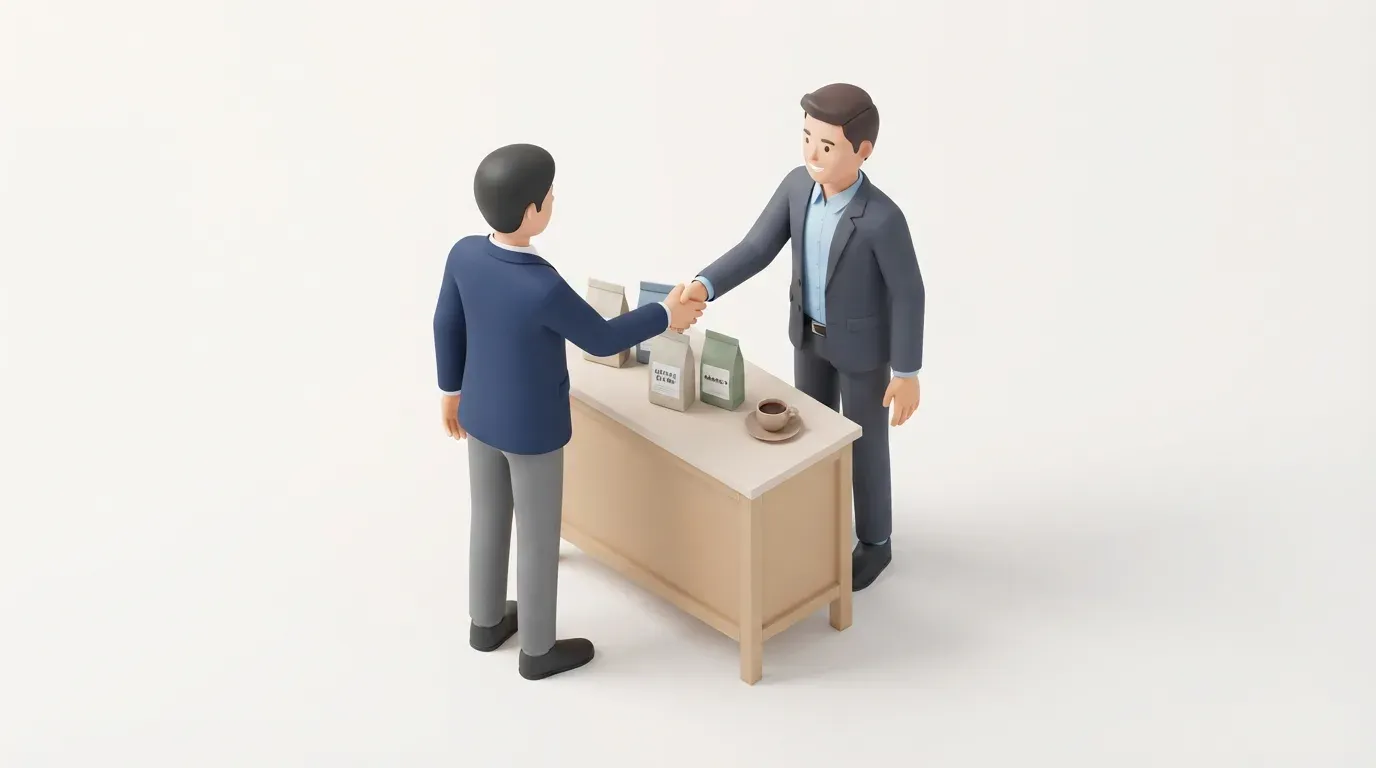
Negotiating a Deal: first and second conditionals for offers and counter-offers
About this lesson
In this B2 Business English lesson plan, first and second conditionals for negotiating separate firm offers from ideas that promise nothing.
- Grammar
- The first conditional for firm offers (If you sign today, we'll include training.), the second for testing ideas (If we paid sooner, would you…?), plus unless and If I were you.
- Topic
- A two-year supply contract with a hotel group in Rotterdam, with words such as counter-offer, meet someone halfway, sticking point and strike a deal.
- Activities
- A negotiation plan, the talks to hear, self-checking drills, a client's follow-up chat, buyer and seller role-plays in boxes, then an email confirming the terms and three recorded offers.
What's inside
Chapter 1Warm-up: Everything Is Negotiable
Chapter 2Reading: Jess's Game Plan
Chapter 3Listening: Shall We Shake on It?
Chapter 4Grammar: If You Sign Today…
- Study the scheme: first and second conditionalsGrammar schemeTry it
- Choose the correct option: a real offer or just an idea?Choose the optionUnlock
- Fill in the gaps: use will or would in the main clauseFill in the gapsTry it
- Fill in the table: firm offers and tentative ideasFill in the tableUnlock
- Choose the correct answer: what does it mean?QuizUnlock
Chapter 5Speaking: Your Move
Chapter 6Homework: Put It in Writing
- Choose the correct option: offers, ideas and adviceChoose the optionUnlock
- Find the matching pairs: negotiation phrases and their meaningsMemory gameUnlock
- Write an email confirming the agreed termsWriting, checked by the teacherUnlock
- Record three conditional offersSpeaking, checked by the teacherUnlock
Negotiation vocabulary
10 words and phrases from the lesson, each with a picture and audio in edio.
+7 more with pictures and audio in the lessonMore words
- meet someone halfway
- a sticking point
- bottom line
- walk away
- a volume discount
- lock in a price
- strike a deal
Grammar: first and second conditionals in a negotiation
Across a negotiating table, the verb form tells the other side how serious an offer is. Learners keep the first conditional for offers they mean and the second for ideas they're only testing, then add unless, If I were you and the rules for the if-part.
First and second conditionals in a negotiation
A firm offer or just an idea? The verb forms tell the other side.
First conditional: an offer you mean
If + present simple, then will, can or may + verb: If you sign for two years, we'll include free training. The condition is real and likely, so only make an offer you're ready to keep.
If + present simplewill / can / may + verb
If you sign for two years, we'll include free training.
If Kade orders two tons a month, we can go down to €21.50.
Second conditional: an idea, not a promise
If + past simple, then would, could or might + verb: If we paid within 30 days, would you lower the price? The past form doesn't mean past time here; it makes the idea sound less committed, so it tests the water and promises nothing.
Second conditional: an idea, not a promise
If + past simplewould / could / might + verb
If we paid within 30 days, would you lower the price?
If you came down to €19, we'd sign today.
In a negotiation
The second conditional sounds less committed: "If we paid faster, would you lower the price?" tests an idea and promises nothing. When you're ready to promise, switch to the first conditional: "If you sign today, we'll include training."
Real or imaginary?
The second conditional also covers what isn't true now: If we had a bigger budget, we'd order more. (We don't.) In the main clause, will becomes would, can becomes could and may becomes might.
Real or hypothetical?
First: real and likely, and you mean it
- If you agree to 45 days, we'll sign today.
- If the market falls, we'll talk about it at the next review.
- Unless the price is fixed for six months, Lukas won't sign.
Second: imaginary, unlikely, or just testing an idea
- If we had a bigger budget, we'd order more. (We don't.)
- If I were you, I'd take the two-year deal. (advice)
- If we offered free training, would you accept €21? (no promise yet)
will or would, can or could, may or might
| Meaning | First conditional | Second conditional |
|---|---|---|
| a sure result | we will include training | we would include training |
| it's possible, we're able to | we can lower the price | we could lower the price |
| perhaps | Lukas may say yes | Lukas might say yes |
Unless, If I were you, and the comma
Unless means if … not, so it takes no second not: Unless you order 2 tons a month, we can't offer €21. If I were you, I'd… gives advice. The if-part can come first, with a comma, or second, with none.
- unless = if … not: Unless we meet in the middle, we'll be here all night. (= If we don't meet in the middle, …)
- In the second conditional, can becomes could: If you could start next month, we'd sign today.
- If I were you, I'd … gives advice. In formal English, use were for every person: if he were, if it were. Was is common in informal speech.
- The if-part can come first (with a comma) or second (no comma): We'll include training if you sign today.
Typical mistakes
If the samples will arrive on Friday, I'll call you.
If the samples arrive on Friday, I'll call you.
No will in the if-part: use the present simple.
If we would sign for two years, would you lower the price?
If we signed for two years, would you lower the price?
No would in the if-part: use the past simple.
If you signed today, we'll include training.
If you sign today, we'll include training.
Don't mix the forms: present + will, past + would.
Unless you don't order 2 tons a month, we can't offer €21.
Unless you order 2 tons a month, we can't offer €21.
Unless already means if … not.
More lessons on this grammar: Zero and first conditional lessons and exercises · Second conditional lessons and exercises
Try the first and second conditionals exercises
Try them yourself: these are the same exercises your students do in edio.
What's in the lesson
- 10 auto-checked exercises
- 3 games
- 2 teacher-checked tasks
- 1 real-life document
- 1 grammar scheme
- 1 set of word cards
- 1 audio clip
- 1 picture
- 1 transcript
The main objectives of this lesson are to:
- make a firm offer with the first conditional: If you sign for two years, we'll include free training.
- test an idea without promising anything, with the second conditional: If we paid within 30 days, would you lower the price?
- keep will and would out of the if-part, and use unless and If I were you: Unless we meet in the middle, we'll be here all night.
- trade concessions to reach a deal, then confirm the agreed price, volume, contract length, payment and extras in an email
Lesson 8 closes the unit Meetings and figures in Business English B2 · A Year at Wrenfield: after scheduling, figures and a meeting comes a negotiation. It builds on the first conditional of English A2.2 lesson 15 and on lesson 5's rule of no will after when, which holds after if too; lesson 17 takes conditionals into the past with the third and mixed forms. With a price per kilo at stake, will or would decides whether the other side hears a promise.
The warm-up wheel asks how students feel about bargaining and bluffing, and ten word cards with pictures and audio run from an opening offer to strike a deal. Jess's negotiation plan sets out her opening position, her limits and what she can offer; the AI-voiced listening then follows the talks in Rotterdam, offer by counter-offer, until both sides shake on it.
Four checked exercises follow the scheme, among them a table that turns firm offers into tentative ideas. In the chat, students answer the client's follow-up questions by message, and boxes deal out buyer and seller role-plays over office desks, cleaning contracts and software licenses. For homework, a conditional drill and a memory game check themselves; an email confirming agreed terms and three recorded offers go to the teacher.
- Grammar:
- first conditional · second conditional · unless · If I were you
- Topic:
- negotiation · contracts · offers and counter-offers
Teaching tips
- Pair the open-box cards: give the seller and the buyer of the 40 desks to two students, so they negotiate one deal from both sides and must agree terms or walk away.
- Stop the listening at each offer and ask whether it's firm or a test: If you came down to nineteen, we'd sign today tests; if you agree to twenty-one, we'll train your staff for free commits.
- Use Jess's plan as a template before a real negotiation: in-company learners fill in what they know, their opening position, their limits and what they can offer.
- Ban will after if during the role-plays: anyone who says If you will sign… must make one small concession to the other side.
Liked it?
Teach the whole lesson in edio
21 exercises in 6 chapters, ready to teach. edio is an online platform for language schools and teachers: ready-made interactive lessons, live classes, homework and student progress in one place.
Start a free trial
7 days, no credit card.
Open the lesson
Find it in the library of 621 ready lessons. Teach it as it is, or copy any chapter into your own lessons.
Teach it live or as homework
Students work in their own accounts, in sync with you during the lesson, and the practice exercises check themselves.
The whole course: Business English B2 · A Year at Wrenfield
20 lessons at B2 in American English that follow a year at Wrenfield Coffee Roasters in Portland, Oregon, as founder Claire Morgan and her team win a Dutch hotel contract. Learners network, write emails, run meetings, negotiate, handle complaints and present figures, with one grammar point per lesson.See the course
Unit 1 First contacts
networking, a company story, a business lunch and emails: present tenses, the present perfect, question tags, indirect questions
Unit 2 Meetings and figures
scheduling, sales figures, running a meeting and negotiating: future forms, trends, gerunds and infinitives, conditionals
 Lesson 5Setting Up MeetingsFuture forms for meetings and schedules
 Lesson 6The Monthly FiguresDescribing trends
 Lesson 7Running a MeetingGerunds and infinitives in meetings
 Lesson 8 · you're hereNegotiating a DealFirst and second conditionals in a negotiation
Unit 3 Problems and growth
a complaint, a late shipment, a launch and hiring: the present perfect continuous, the passive, comparatives, relative clauses
Unit 4 Reports, prices and feedback
reporting back, explaining prices, expenses and feedback: reported speech, linking words, modals of obligation, past modals
Unit 5 Looking back and ahead
what went wrong, other cultures, an agency and next year: the third and mixed conditionals, past deduction, the causative, the future perfect