Zero and first conditional: ESL lesson plans and exercises
Levels A2 to C1 10 lesson plans · 5 drill lessons Exercises that check themselves
The zero conditional states what happens every time a condition is met (If you mix red and white, you get pink), while the first conditional links one real situation in the future to its result: If it rains tomorrow, we'll stay home. This page collects 10 ready-made lessons on both from the edio.ai library, levels A2 to B2, in American English, with topics that run from brain freeze to bug reports and code review. Play exercises from the lessons, compare the two patterns in their grammar schemes, and choose a lesson for your group by level. Every lesson is interactive, with drills that mark each answer as students go.
Zero and first conditional lesson plans and drills
10 lesson plans and 5 drill lessons, A2 to C1. Lesson plans are whole lessons with reading, listening and speaking; drill lessons are 45 to 46 self-checking exercises with no new words.
 A2Lesson planEnglish A2.2
Brain freeze!
 A2Lesson planEnglish A2.2
Doctor's orders: go to the park!
 A2DrillsGrammar Practice · A2
Zero conditional: what happens if…?
 A2DrillsGrammar Practice · A2
First conditional: what will you do if it rains?
 B1Lesson planEnglish B1 · Hot Topics
Black Friday: deal or trap?
 B1Lesson planEnglish B1.1
What are the Marfa Lights?
 B1Lesson planEnglish B1.2
Pitch it to the Sharks!
 B1Lesson planEnglish for IT B1
Steps to reproduce
 B1Lesson planEnglish for IT B1
Your first pull request
 B1DrillsGrammar Practice · B1
Conditionals compared: real or imagined?
 B2Lesson planBusiness English B2
Negotiating a Deal
 B2Lesson planEnglish B2.2
A college that says yes
 B2Lesson planEnglish for IT B2
Why meetings argue about the bike shed
 B2DrillsGrammar Practice · B2
Unless, in case and as long as: on one condition
 C1DrillsGrammar Practice · C1
Alternatives to if: supposing they say no?
Try the first conditional exercises
One exercise from each of 6 lessons. These are the same exercises your students do in edio.
Zero and first conditional explained
We use the zero conditional for facts, rules and anything that happens every time: If you press this switch, the fan starts. Both halves take the present simple. The first conditional is for one real future situation and its likely result: if + present simple, then will or won't + verb, as in If you call me, I'll come. In both, the if-part never takes will.
The zero conditional: present + present
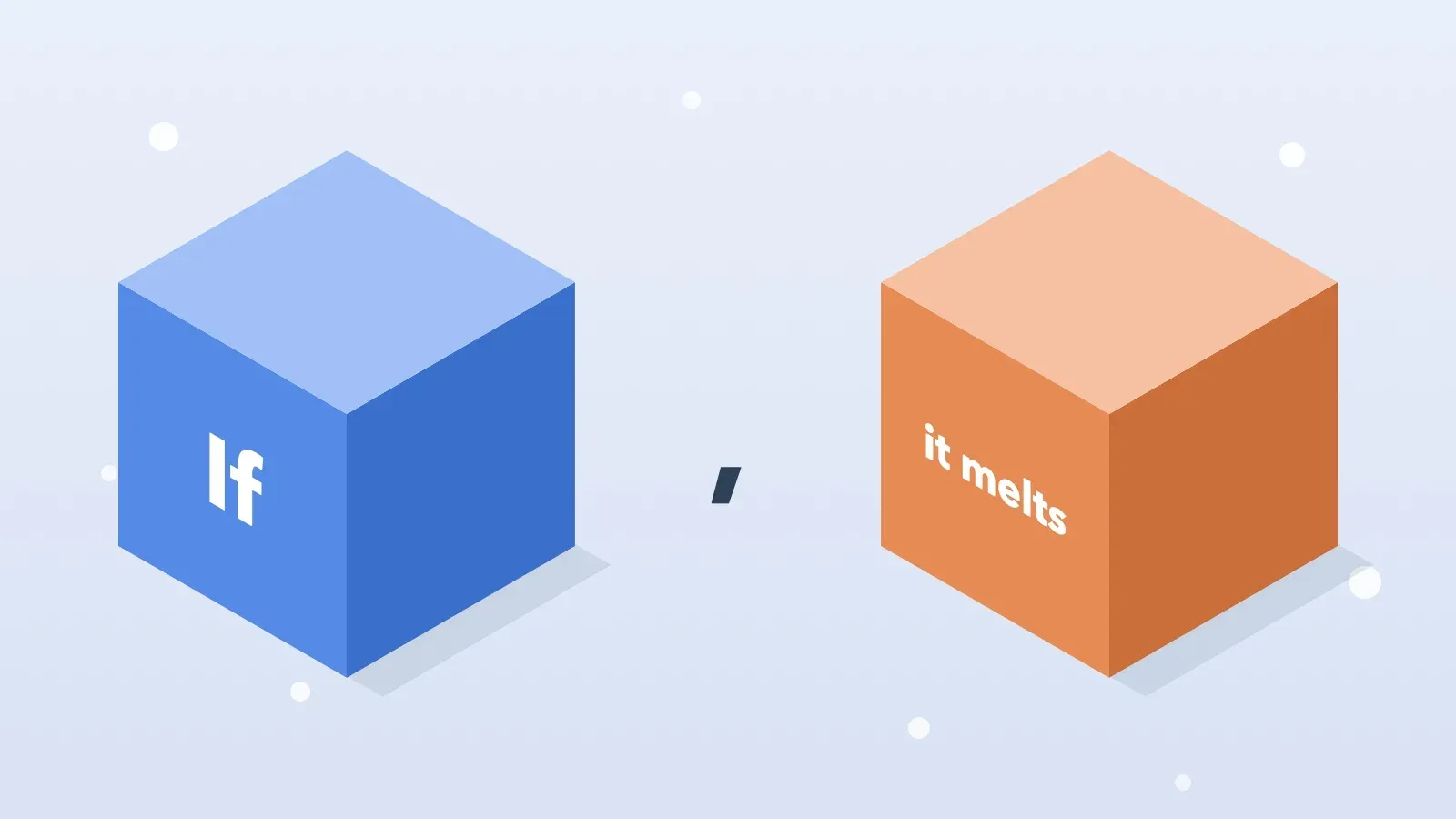
When the result follows every time, both halves stay in the present simple: If ice cream gets warm, it drips. A comma follows the if-part when it comes first, and there's none when the result leads: Ice cream melts if it's hot.
The zero conditional
If + present simple + a comma ( , )present simple
If you eat ice cream fast, you get brain freeze.
If ice cream gets warm, it drips.
Where's the comma?
if first: use a comma
- If it's hot, ice cream melts.
- If you eat fast, you get brain freeze.
if second: no comma
- Ice cream melts if it's hot.
- You get brain freeze if you eat fast.
From the lesson Brain freeze! (English A2.2)
The first conditional: if + present, will + verb
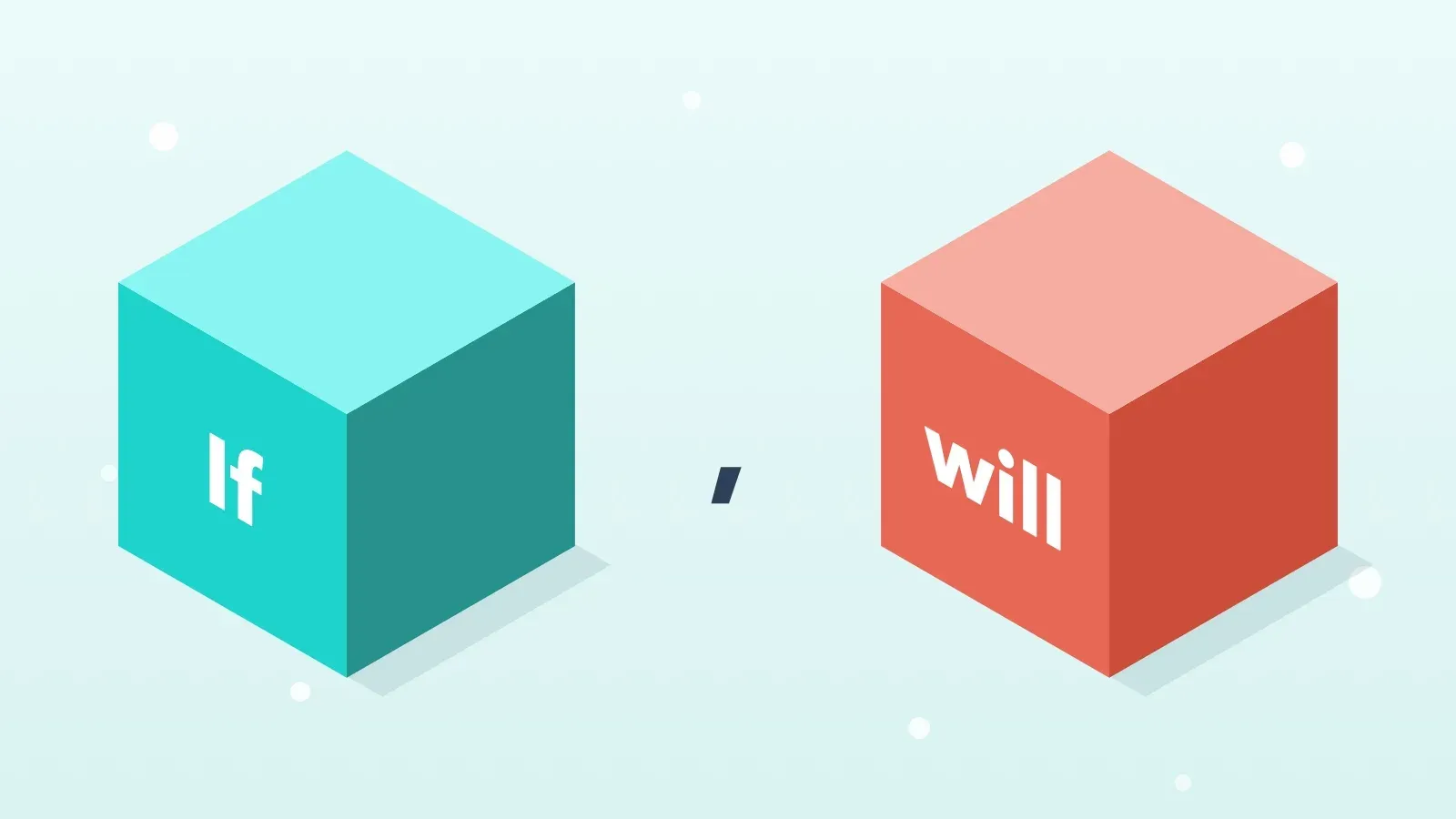
The if-part names a real possibility in the present simple, and the result moves to will or won't: If she walks every day, she'll feel better. Questions put will before the subject: What will you do if it rains?
Every person
| Who | If + present simple | will / won't + verb |
|---|---|---|
| I | If I walk in the park, | I'll feel better. |
| you | If you walk in the park, | you'll feel better. |
| he | If he walks in the park, | he'll feel better. |
| she | If she walks in the park, | she'll feel better. |
| it | If it's sunny tomorrow, | it'll be a great day. |
| we | If we walk in the park, | we'll feel better. |
| they | If they walk in the park, | they'll feel better. |
Negatives and questions
| What | Example |
|---|---|
| won't = will not | If it rains, we won't go to the park. |
| don't / doesn't in the if part | If you don't sleep, you'll be tired tomorrow. |
| Will…? and short answers | Will you feel better if you walk? – Yes, I will. / No, I won't. |
| What will…? | What will you do if it rains? |
From the lesson Doctor's orders: go to the park! (English A2.2)
Zero or first: every time, or one future situation?
If you heat ice, it melts is true every time, so both verbs are present. If it's sunny tomorrow, we'll go to the park is one plan, and its future result needs will, not we go.
Always true, or one future situation?
Always true, every time (the zero conditional): present + present: If you heat ice, it melts. One real situation in the future (the first conditional): if + present, will + verb: If it's sunny tomorrow, we'll go to the park. A future result needs will: If you walk tomorrow, you'll feel better (not: you feel better).
From the lesson Doctor's orders: go to the park! (English A2.2)
If or when in a bug report
Bug reports describe what happens each time someone repeats the steps, so they use the zero conditional, with when as good as if: When the file is over 10 MB, the upload fails.
If / When + present simplepresent simple
If you rotate the phone, the amount disappears.
When the file is over 10 MB, the upload fails.
From the lesson Steps to reproduce (English for IT B1)
Might, can and unless in a code review
The result isn't always will: might marks a risk and can a possibility, as in If Rui approves it, Iryna can merge it. Unless means if… not: We won't merge it unless the tests pass.
| Use | Form | Example |
|---|---|---|
| A consequence | If + present, will + verb | If we cache this, the page will load faster. |
| A risk | If + present, won't / might + verb | If a refund changes, the merchant might see an old status. |
| A promise | If you + present, I'll + verb | If you add a test, I'll approve it. |
| A possibility | If + present, can + verb | If Rui approves it, Iryna can merge it. |
| A negative condition | If + don't / doesn't + verb | If we don't cache it, the screen will stay slow. |
| unless = if not | unless + present (positive) | We won't merge it unless the tests pass. |
| A question | What will happen if…? | What will happen if the merchant is offline? |
From the lesson Your first pull request (English for IT B1)
As long as, provided and on condition that
At B2, these linkers mean only if, from everyday to formal: We can ship on Friday as long as nobody adds new fields. Like if, each one takes the present simple for the future.
| Linker | Meaning | Example |
|---|---|---|
| as long as + present | only if this happens | We can ship on Friday as long as nobody adds new fields. |
| provided (that) / providing (that) + present | only if; a little more formal | I'll bring three cases provided Kenji can join. |
| on condition that + present | only if; formal and strict | I'll facilitate on condition that nobody argues when I park a topic. |
| unless + positive verb | if … not | Unless we freeze the design today, we'll miss the date. |
| plan + ; otherwise + result | if not (it points back to the plan) | Let's freeze it; otherwise we'll argue about colors again. |
| suppose / supposing + present | imagine this happens: what then? | Suppose we still don't agree. Who makes the call? |
From the lesson Why meetings argue about the bike shed (English for IT B2)
Questions about the zero and first conditionals
What is the zero conditional?
When do we use the first conditional?
How do you form the first conditional?
What's the difference between the zero and first conditional?
Can you use when instead of if?
How do you use unless?
Are there interactive zero and first conditional exercises?
How do I teach the first conditional to A2 students?
What are good first conditional activities?
Can students work through these lessons alone, as homework?
More English grammar
Lessons for every grammar point, from the verb to be to reported speech. All grammar points