What does Newspaper Rock say? Likely to, may well and how sure we are
About this lesson
This B1 ESL lesson plan teaches likely to and may well, with will definitely and will probably, through Newspaper Rock in Utah, whose petroglyphs no one can explain.
- Grammar
- How sure we are about the future, from will definitely through will probably, be likely to, may well and might to definitely won't, all + the base form.
- Topic
- Newspaper Rock in southeastern Utah, a sandstone panel of petroglyphs carved over many centuries, with words such as petroglyph, overhang, desert varnish and bighorn sheep.
- Activities
- Riley's feature, a mini mystery episode and a listener's message, self-checking drills, a mystery script to complete, a chat to write one and open boxes.
What's inside
Chapter 1Warm-up: Can you read a rock?
Chapter 2A rock full of questions
Chapter 3Mystery on the mic
Chapter 4Grammar: It'll probably stay a mystery
- Study the scheme: how sure are you?Grammar schemeTry it
- Choose the correct optionChoose the optionUnlock
- Fill in the gaps: use the words in bracketsFill in the gapsTry it
- Fill in the table: be likely to and be unlikely toFill in the tableUnlock
- Choose the correct answer: how sure?QuizUnlock
- Put the words in the correct orderUnjumbleUnlock
Chapter 5Your turn: tell a mystery
Chapter 6Homework
- Match the words and the meaningsMatchUnlock
- Unscramble the wordsAnagramUnlock
- Fill in the gaps with the lesson's wordsFill in the gapsUnlock
- Sort the words into the correct columnsSort into columnsUnlock
- Choose the correct optionChoose the optionUnlock
- Fill in the gaps: make predictions with the words in bracketsFill in the gapsUnlock
- Put the words in the correct orderUnjumbleUnlock
- Choose the right sentenceQuizUnlock
- Choose the correct option: our answer to NatalieChoose the optionUnlock
- Drag the words into the gaps: Noelle's mystery scriptDrag and dropUnlock
Vocabulary
12 words and phrases from the lesson, each with a picture and audio in edio.
+9 more with pictures and audio in the lessonMore words
- panel
- sandstone
- overhang
- desert varnish
- creek
- rider
- bighorn sheep
- footprint
- script
Grammar: certainty about the future
English has a scale of words for how sure you are about the future, from will definitely down to definitely won't. With a rock whose meaning no one knows, learners pick the words that match how sure they are, use be likely to and may well with the base form, and put probably and definitely in the right place.
Will anyone ever read it?
How sure are you about the future? Choose the words for 100%, 0% or something in between.
From 100% to 0%
Will definitely is 100%, will probably and be likely to about 80%, may well about 60% and might about 50%. Probably won't and be unlikely to are about 20%, and definitely won't is 0%: Footnote definitely won't wash the mugs.
| How sure? | Say (+ base form) | Example |
|---|---|---|
| 100% ✅ | will definitely | You will definitely see animals on the panel. |
| about 80% | will probably / be likely to | It will probably stay a mystery. = It's likely to stay a mystery. |
| about 60% | may well | Experts may well never agree. |
| about 50% | might | We might learn more one day. |
| about 20% | probably won't / be unlikely to | You probably won't spot every image. = You're unlikely to spot every image. |
| 0% ❌ | definitely won't | Footnote definitely won't wash the mugs. |
Be likely to and be unlikely to
Be likely to means the same as will probably, and be changes with the person: I'm likely to win the bet. They're unlikely to decode it. Don't drop be, and don't add will: The rock is likely to keep its secrets, not is likely to will keep.
be likely to: every person
| Who | be likely to | be unlikely to |
|---|---|---|
| I | I'm likely to win the bet. | I'm unlikely to win the bet. |
| you | You're likely to see deer. | You're unlikely to see every image. |
| he | He's likely to play a drumroll. | He's unlikely to stay quiet. |
| she | She's likely to check the facts. | She's unlikely to believe it. |
| it | It's likely to keep its secrets. | It's unlikely to change. |
| we | We're likely to get many theories. | We're unlikely to figure it out. |
| they | They're likely to agree. | They're unlikely to decode it. |
Common mistakes
It won't definitely rain.
It definitely won't rain.
definitely / probably before won't
The rock is likely to will keep its secrets.
The rock is likely to keep its secrets.
be likely to + base form, no will
Experts may well to disagree.
Experts may well disagree.
may well + base form, no to
Visitors likely to see deer.
Visitors are likely to see deer.
don't forget be: am / is / are
May well, questions and It's likely that
May well takes the base form with no to: Experts may well never agree. Questions use Will… ever or Is it likely to…?, and Probably not and Definitely not make short answers. It's likely that it will rain is another correct pattern.
may well, be likely to, questions
may well + base form: Experts may well never agree. (Not: may well to.) be likely to + base form: It's likely to rain. (Not: is likely to will.) You can also say: It's likely that it will rain. Questions: Will anyone ever read it? Is it likely to rain? Short answers: Probably not. Definitely not.
Definitely and probably: before or after won't?
In the positive, the adverb comes after will: It will probably stay a mystery. In the negative, it comes before won't: You probably won't spot every image, not won't probably. With will not in full, probably will not and will probably not are both correct.
Yes: will + definitely / probably
will ('ll)definitely / probablybase form
It will probably stay a mystery.
You'll definitely find feet with six toes.
No: definitely / probably + won't
definitely / probablywon'tbase form
You probably won't spot every image.
Footnote definitely won't help.
Word order in the negative
Say definitely won't and probably won't. Not: won't definitely, won't probably. With will not in full, probably will not and will probably not are correct too.
Newspaper Rock and the future
- Will anyone ever decode the panel? – Probably not.
- Darius thinks someone will definitely decode it.
- The rock is likely to keep its secrets.
- Listeners may well have great theories.
- We probably won't figure out why the feet have six toes.
- People will definitely keep asking questions.
More lessons on this grammar: Future tenses lessons and exercises
Try the likely to and may well exercises
Try them yourself: these are the same exercises your students do in edio.
What's in the lesson
- 19 auto-checked exercises
- 5 games
- 1 article
- 1 grammar scheme
- 1 set of word cards
- 2 audio clips
- 2 pictures
- 2 transcripts
The main objectives of this lesson are to:
- say how sure you are, from 100% to 0%: You'll definitely find feet with six toes. We might learn more one day. Footnote definitely won't wash the mugs.
- use be likely to and be unlikely to for every person: The rock is likely to keep its secrets. We're unlikely to figure it out.
- put definitely and probably in the right place: It will probably stay a mystery, but You probably won't spot every image, not won't probably
- use may well + the base form, without to: Experts may well never agree, not may well to agree
- build a mystery script with a hook, facts, theories, a prediction and a question: Maybe it was a resting place for travelers.
Lesson 31 is the third lesson of Mysteries and lost worlds, unit 8 of English B1.1 · Stories That Travel. It builds on A2.2 lesson 13, where will made predictions, on A2.1 lesson 31, which taught might, and on lesson 10, which compared future forms. Lesson 32 closes the course with unless, as long as and in case. A rock that may well never be decoded makes everyone say how sure they are.
Students spin a wheel of questions about mysteries, puzzles and old pictures on rocks, then learn twelve words, from figure out and agree to desert varnish and script, with pictures and audio. They read Riley's feature on Newspaper Rock, then hear Riley and Darius record a mini mystery episode and bet on whether anyone will ever decode it, and Natalie, a 25-year-old from Utah, give her own prediction, both AI-voiced. The grammar chapter has the scheme and five self-checking drills, among them a table of be likely to for every person. In the speaking chapter, students complete Riley's five-part mystery script, write a script with Riley in a chat and open boxes to tell a mystery.
All ten homework tasks check themselves: a word match, an anagram, a gap-fill and a column sort for the words, then a choice of forms in new sentences, predictions to build from the words in brackets, word order, a quiz on the right sentence, the hosts' answer to Natalie and Noelle's mystery script with words to drag in.
- Grammar:
- will definitely / definitely won't · will probably / probably won't · be likely to / be unlikely to · may well · might
- Topic:
- Newspaper Rock · Utah · petroglyphs · rock art · Ancestral Puebloan people · Ute people · mysteries · Stories That Travel
Teaching tips
- Draw a line from 0% to 100% on the board and place definitely won't, probably won't, might, may well, will probably and will definitely on it. Students then add their own predictions for the weekend.
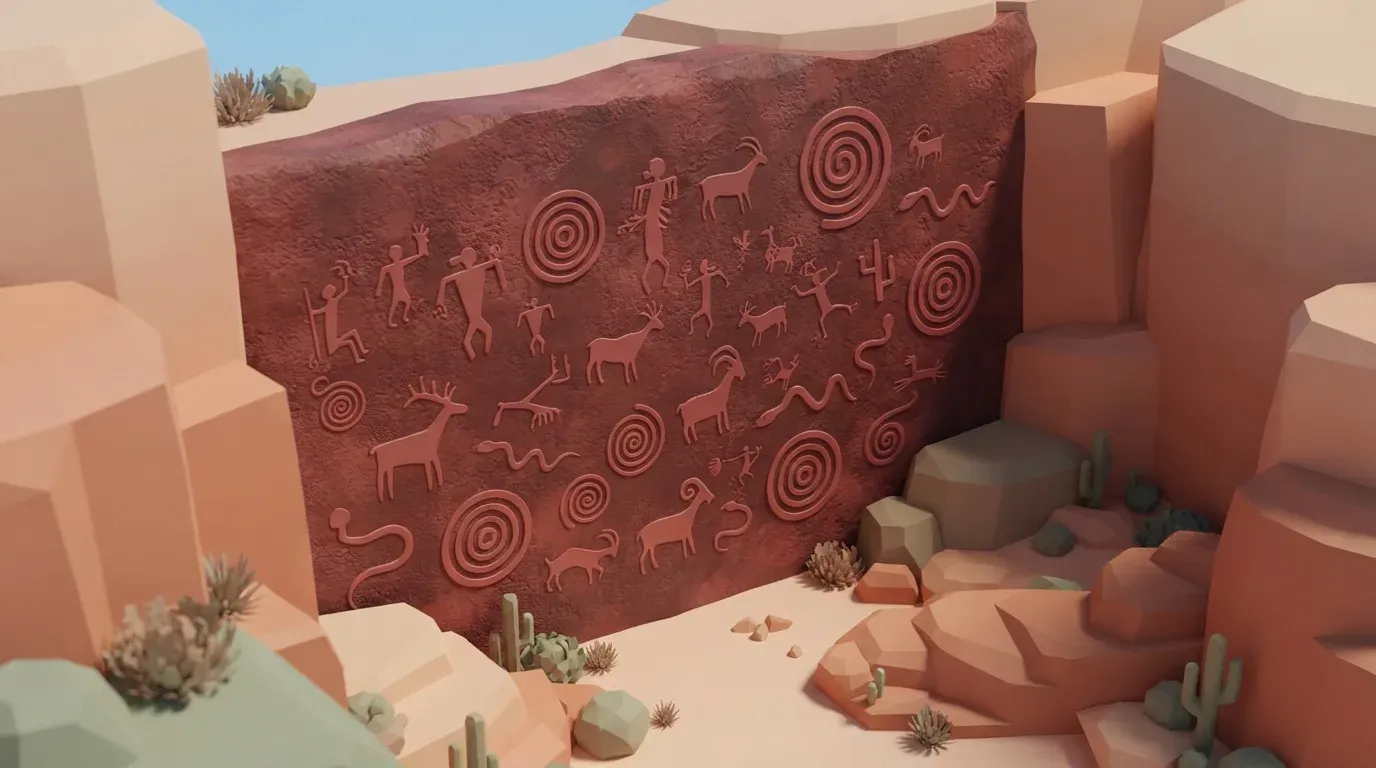
- Show the cover before the feature and ask what the carvings might mean. Collect guesses with maybe, then read: no one knows, and the Bureau of Land Management asks questions instead of giving answers.
- Play the mini mystery episode twice: first for the bet, then for each prediction. Students hold up fingers for how sure the speaker is, from one for definitely won't to five for will definitely.
- Let pairs tell a local mystery after the chat, in the script's five parts: hook, facts, theories, a prediction and a question for listeners. The class answers the question with may well or be likely to.
Liked it?
Teach the whole lesson in edio
33 exercises in 6 chapters, ready to teach. edio is an online platform for language schools and teachers: ready-made interactive lessons, live classes, homework and student progress in one place.
Start a free trial
7 days, no credit card.
Open the lesson
Find it in the library of 621 ready lessons. Teach it as it is, or copy any chapter into your own lessons.
Teach it live or as homework
Students work in their own accounts, in sync with you during the lesson, and the practice exercises check themselves.
The whole course: English B1.1 · Stories That Travel
32 lessons for adults at B1 in American English, each built around a true story. Riley, Jade and Darius make a podcast in Kansas City about true American stories, and each lesson tells one, from a seaplane airport in Alaska to the Marfa Lights of West Texas. Learners compare the present perfect with the past simple, use future forms, modals and quantifiers, and give their own opinions. The practice exercises check themselves.See the course
Unit 1 Travel smart
the present perfect vs the past simple, for and since, indirect questions, be used to and get used to
 Lesson 1Would you visit an airport just for fun?Present perfect vs past simple
 Lesson 2Would you sleep in a 300-year-old inn?For and since with the present perfect
 Lesson 3My suitcase has gone to Honolulu!Indirect questions for polite requests
 Lesson 4Can you practice a flight?Be used to and get used to
Unit 2 Dream jobs, new jobs
will have to and won't be allowed to, the present perfect continuous, simple vs continuous, would vs used to
 Lesson 5Would you jump off a moving boat for a job?Will have to, will be able to and will be allowed to
 Lesson 6Working from anywherePresent perfect continuous
 Lesson 7Could you be a camp counselor?Present perfect simple vs continuous
 Lesson 8Would you live in a lighthouse?Would vs used to for the past
Unit 3 Space and discovery
it's + adjective + to, What's it like to…?, future forms compared, future time clauses, too and enough + to
Unit 4 Life online
the more…, the more…, be supposed to, ought to and had better, let, make and allow
 Lesson 13The internet's first word was “LO”Comparative and comparative; the more…, the more…
 Lesson 14Who sent the first spam?Be supposed to for rules, expectations and plans
 Lesson 15Is your password really safe?Ought to and had better for advice and warnings
 Lesson 16Who writes Wikipedia?Let, make and allow + someone
Unit 5 Screen and page
-ed and -ing adjectives, gradable and extreme adjectives, present tenses for a plot, articles for things in general
 Lesson 17Why do readers still love Nancy Drew?-ed and -ing adjectives for feelings
 Lesson 18Movie night in your carGradable and extreme adjectives
 Lesson 19Would you review a book on TV?Present tenses to tell a plot
 Lesson 20Where are the books about girls like me?Articles for things in general and specific things
Unit 6 Green living
few and a few, little and a little, all, most, some and none, each and every, fewer and less
Unit 7 Sporting moments
could, was able to and managed to, for, during and while, present tenses for live commentary, question tags
Unit 8 Mysteries and lost worlds
both… and, either… or and neither… nor, uncountable nouns, how sure we are about the future, unless, as long as and in case
 Lesson 29A calendar made of posts?Both… and, either… or, neither… nor
 Lesson 30What was the Great House for?Uncountable abstract nouns
 Lesson 31 · you're hereWhat does Newspaper Rock say?Certainty about the future
 Lesson 32What are the Marfa Lights?Unless, as long as and in case