Zaimki osobowe: tabela, zasady i ćwiczenia online
Poziomy A1–B1 5 planów lekcji · 4 lekcje ćwiczeniowe Ćwiczenia sprawdzane automatycznie
Zaimki osobowe w angielskim zastępują rzeczownik, żeby nie trzeba było go powtarzać: Danny has a dog. He loves it. Ta strona zbiera gotowe lekcje z biblioteki edio (liczba lekcji: 5, poziomy A1–A2) o zaimkach osobowych, zwrotnych i nieokreślonych, a także o one i ones, wszystkie w amerykańskim angielskim. Rozwiąż ćwiczenia z lekcji, przeczytaj zasady na ich schematach i wybierz lekcję dla swojej grupy według poziomu. Każda lekcja jest interaktywna, a zadania na me, myself i nobody same sprawdzają odpowiedzi.
Zaimki osobowe – plany lekcji i ćwiczenia
5 planów lekcji i 4 lekcje ćwiczeniowe, poziomy A1–B1. Plan lekcji to cała lekcja z czytaniem, słuchaniem i mówieniem, a lekcja ćwiczeniowa to 44–47 ćwiczeń sprawdzanych automatycznie, bez nowego słownictwa.
 A1Plan lekcjiEnglish A1.1
National Best Friends Day
 A1Plan lekcjiEnglish A1.2
Thank you, teacher!
 A1ĆwiczeniaGrammar Practice · A1
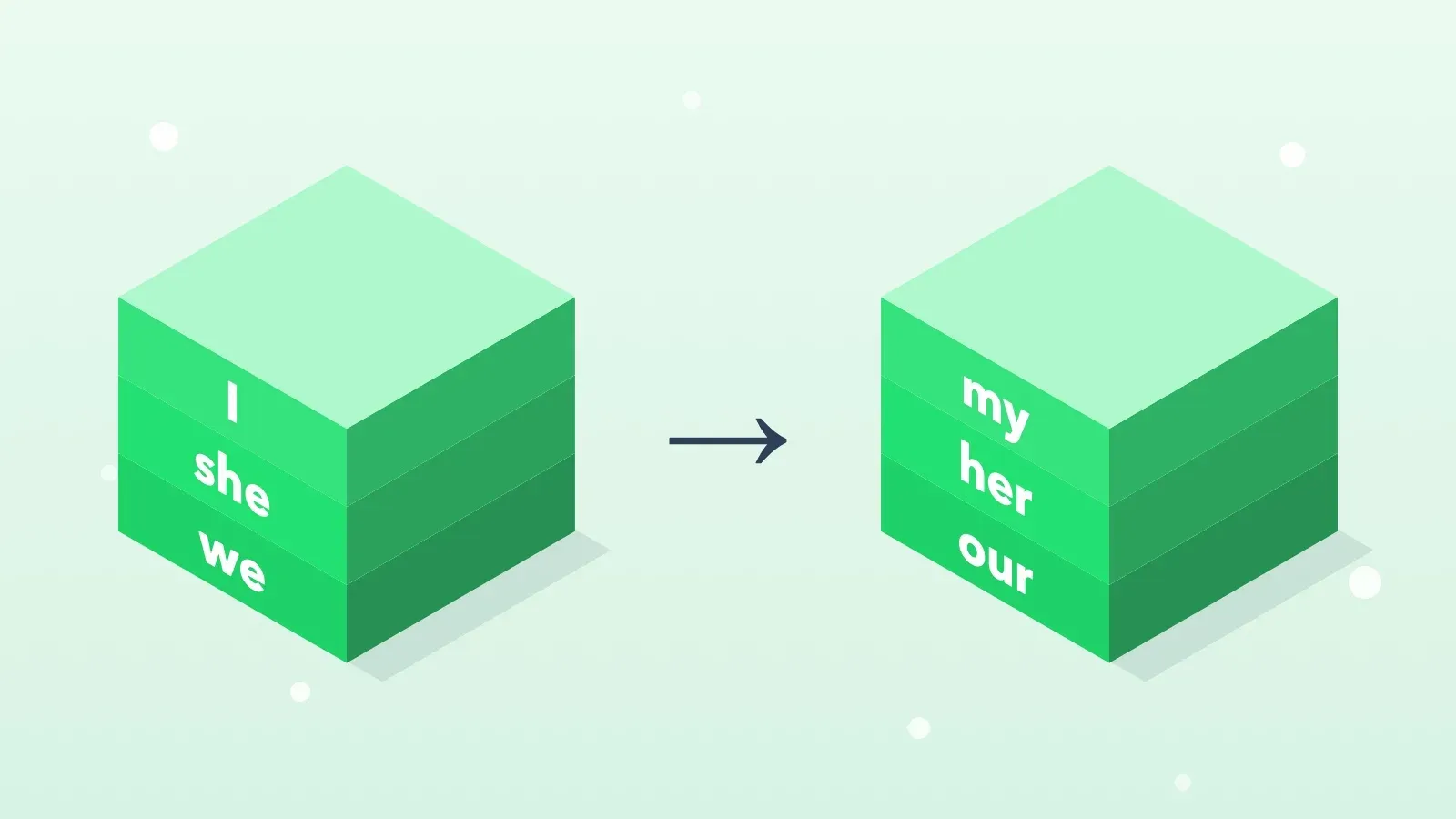
Subject pronouns and possessive adjectives: I, my, she, her
 A1ĆwiczeniaGrammar Practice · A1
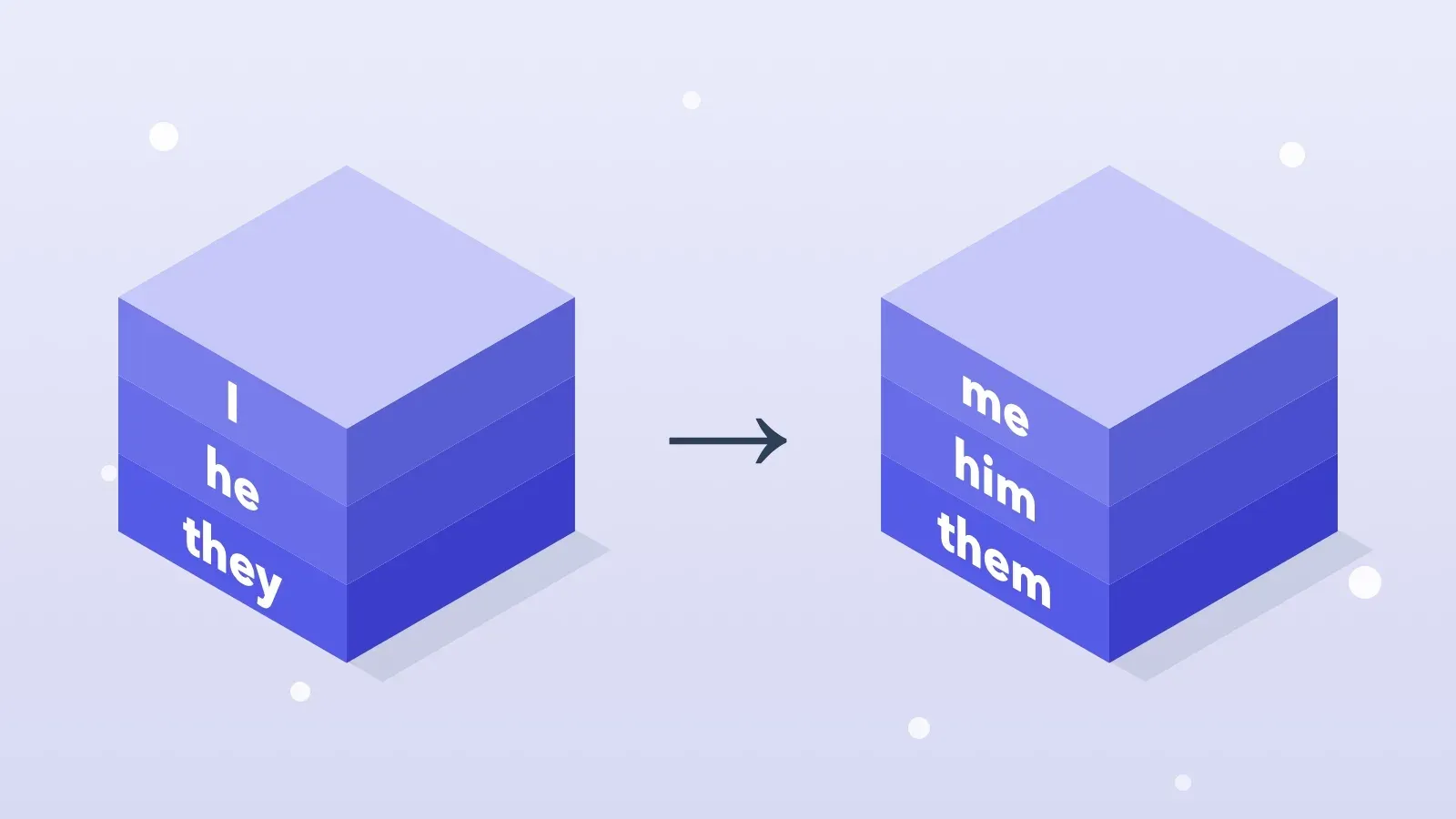
Object pronouns: me, him, her, them
 A2Plan lekcjiEnglish A2.1
Be brave and try
 A2Plan lekcjiEnglish A2.1
Take a book, leave a book
 A2Plan lekcjiEnglish A2.2
Giant balloons over Manhattan
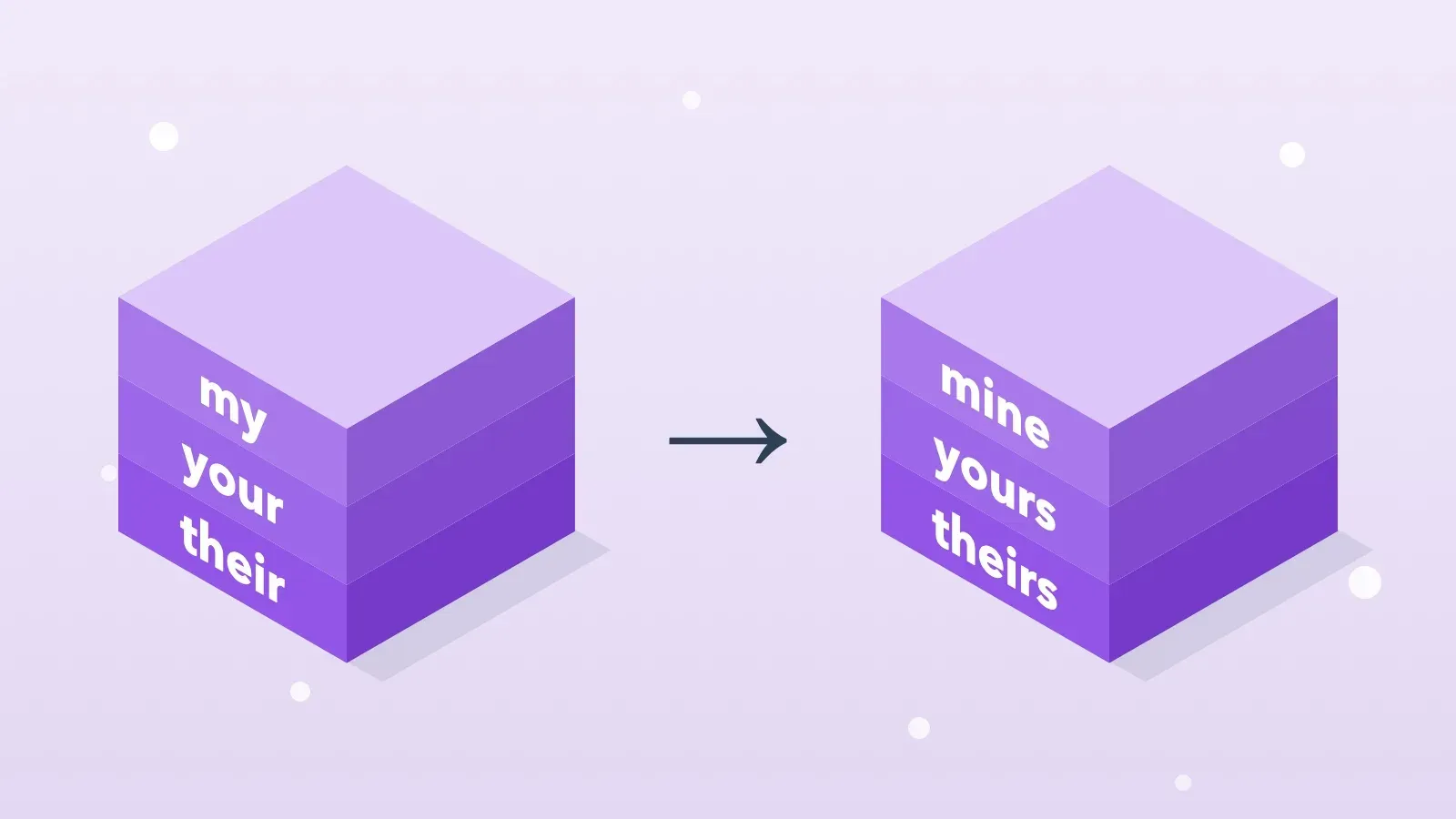 A2ĆwiczeniaGrammar Practice · A2
Possessive pronouns: whose is it?
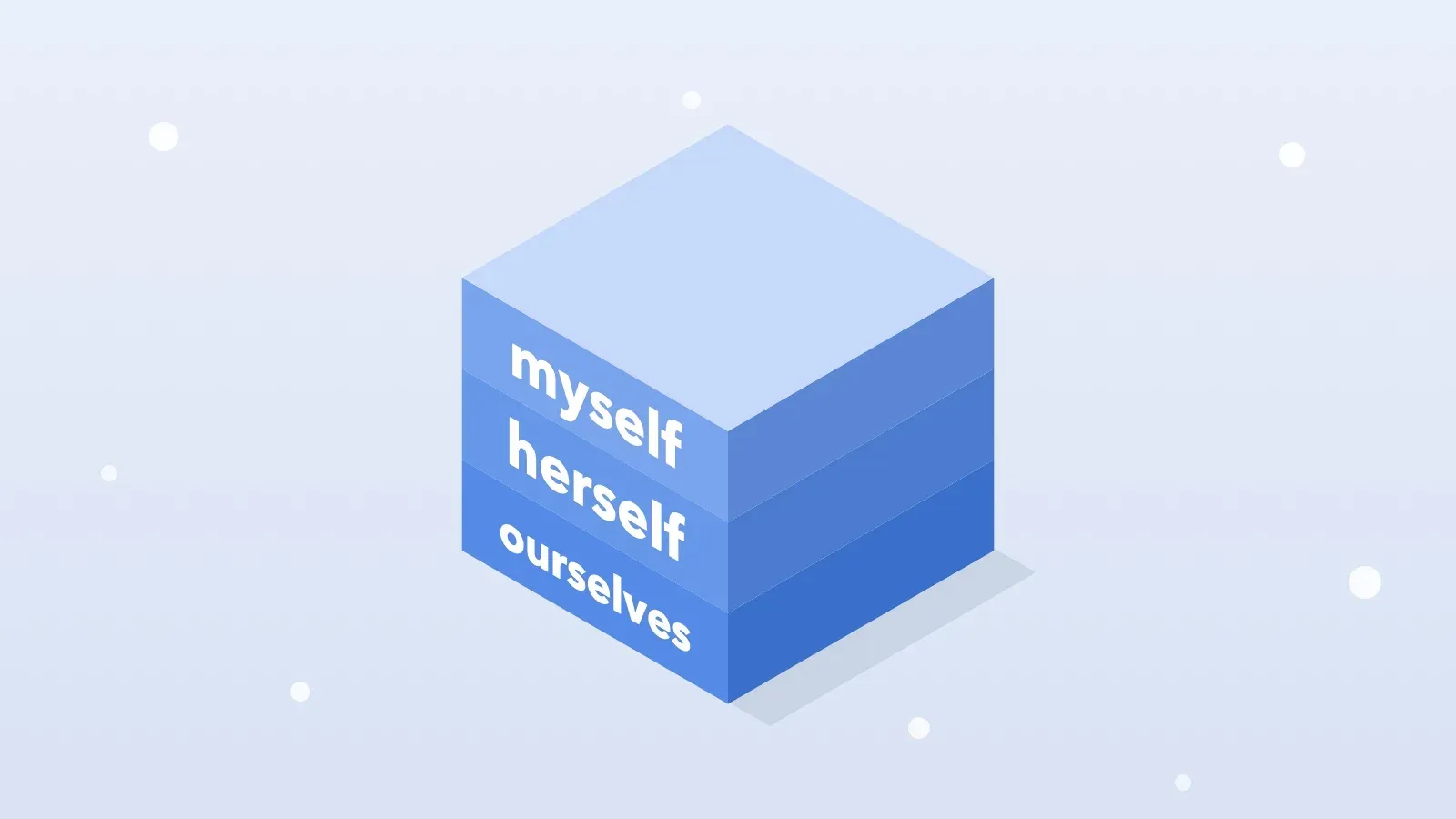 B1ĆwiczeniaGrammar Practice · B1
Reflexive pronouns: did you make it yourself?
Zaimki osobowe – ćwiczenia online
Po jednym ćwiczeniu z 6 lekcji. To te same ćwiczenia, które twoi uczniowie robią w edio.
Zaimki osobowe – zasady i przykłady
Zaimek zastępuje rzeczownik, gdy wiadomo już, o kogo lub o co chodzi. Angielskie zdanie prawie zawsze go potrzebuje: polskie „Jest zmęczona” to She is tired, nigdy samo Is tired. Forma zaimka zależy od jego roli: I przed czasownikiem, me po nim, myself, gdy czynność wraca do podmiotu, a someone czy nothing, gdy nie mówimy, kto lub co.
Zaimki jako podmiot: I, you, he, she, it, we, they
Zaimki w roli podmiotu stoją przed czasownikiem i mówią, kto coś robi albo kim jest: He's Danny, They're BFFs. Tabela łączy każdy z nich z odpowiadającą mu formą dzierżawczą (he → his, they → their), więc uczniowie widzą obie formy obok siebie.
| I, you, he… | my, your, his… | Example |
|---|---|---|
| I | my | I'm Olivia. My best friend is Hannah. |
| you | your | You're Jack. Your best friend is Danny. |
| he | his | He's Danny. His dog is Taco. |
| she | her | She's Priya. Her best friend is Nina. |
| it | its | It's a dog. Its ears are big. |
| we | our | We're roommates. Our house is in Brooklyn. |
| they | their | They're BFFs. Their photo is cute. |
Z lekcji National Best Friends Day (English A1.1)
Zaimki jako dopełnienie: me, him, her, us, them
Po czasowniku i po for, with, to czy from angielski używa formy dopełnienia: She helps me, This card is for you. Tylko you i it wyglądają w obu miejscach tak samo; he zmienia się w him, a they w them.
I → me, he → him: every person
| Before the verb | After a verb or for, with, to | Example |
|---|---|---|
| I | me | Can you help me? |
| you | you | This card is for you. |
| he | him | Thank him! |
| she | her | We love her. |
| it | it | A card? I love it! |
| we | us | Tell us a story! |
| they | them | Give them a card. |
Who does it? Who gets it?
Before the verb: I, he, she, we, they
- She helps me.
- We love him.
- They thank us.
After the verb: me, him, her, us, them
- I help her.
- He loves us.
- We thank them.
Z lekcji Thank you, teacher! (English A1.2)
Zaimki zwrotne i each other
Zaimki zwrotne kończą się na -self lub -selves i wskazują z powrotem na podmiot: Nora was proud of herself. Gdy ludzie robią coś sobie nawzajem, angielski używa zamiast nich each other: Tia and Jamal looked at each other.
Every person
| Who | -self / -selves | Example |
|---|---|---|
| I | myself | I taught myself to swim. |
| you (one person) | yourself | Believe in yourself, Nora! |
| he | himself | Jamal taught himself the long jump. |
| she | herself | Nora was proud of herself. |
| it | itself | The door opened by itself. |
| we | ourselves | We enjoyed ourselves in Chicago. |
| you (two or more) | yourselves | Kids, enjoy yourselves! |
| they | themselves | The kids made dinner themselves. |
-selves or each other?
themselves: A → A, B → B
- Tia and Jamal looked at themselves in the water. (Tia looked at Tia. Jamal looked at Jamal.)
each other: A → B, B → A
- Tia and Jamal looked at each other. (Tia looked at Jamal. Jamal looked at Tia.)
- They cheer for each other, help each other and hug each other.
Z lekcji Be brave and try (English A2.1)
Someone, anything, nobody, everyone
Zaimki nieokreślone działają jak some i any: someone w zdaniach twierdzących, anything w pytaniach i po not. W zdaniu może być tylko jedno przeczenie, więc mówimy I didn't find anything albo I found nothing, nigdy I didn't find nothing.
some-, any-, no-, every-
| Start | People | Things | When? |
|---|---|---|---|
| some- | someone, somebody | something | positive sentences: Someone left a book. |
| any- | anyone, anybody | anything | questions and not: Did anyone call? I didn't find anything. |
| no- | no one, nobody | nothing | a positive verb, no not: Nobody took it. |
| every- | everyone, everybody | everything | all the people or things: Everyone can leave something. |
Two ways to say no: one negative only!
not + any-
- I didn't find anything.
- There isn't anyone at the box.
- We don't pay anything.
no- + a positive verb
- I found nothing.
- There's nobody at the box.
- Nobody pays anything. (any- after no-)
Z lekcji Take a book, leave a book (English A2.1)
One i ones zamiast rzeczownika
One i ones zastępują rzeczownik, który właśnie padł: I like the blue one, Then tie the long ones. One oznacza jedną rzecz, ones dwie lub więcej. Po a lub an pasuje tylko one: a big one.
Don't say the noun twice!
The noun again 😕
- I don't like the red balloon. I like the blue balloon.
- The short ropes are new. The long ropes are old.
one / ones 😊
- I don't like the red balloon. I like the blue one.
- The short ropes are new. The long ones are old.
one or ones?
| Before it | one: one thing | ones: two or more |
|---|---|---|
| a / an + adjective | a big one | no a / an: big ones |
| the + adjective | the yellow one | the yellow ones |
| my favorite, the first | my favorite one, the first one | my favorite ones, the first ones |
| Which…? | Which one is yours? | Which ones are yours? |
| the … with … | the one with the red rope | the ones with the green hats |
Z lekcji Giant balloons over Manhattan (English A2.2)
Pytania o zaimki angielskie
Jakie są zaimki osobowe w angielskim?
Kiedy używamy I, a kiedy me?
Kiedy używamy zaimków zwrotnych w angielskim?
Czym różni się themselves od each other?
Czym są zaimki nieokreślone, takie jak someone i nobody?
Czy mówi się everyone is, czy everyone are?
Czy są interaktywne ćwiczenia z zaimków osobowych?
Jak uczyć zaimków na lekcjach angielskiego?
Jakie zabawy pomagają ćwiczyć zaimki w funkcji dopełnienia?
Czy lekcje o zaimkach nadają się do pracy z jednym uczniem?
Więcej gramatyki angielskiej
Lekcje do każdego zagadnienia gramatycznego, od czasownika to be po mowę zależną. Wszystkie zagadnienia