Pronouns: ESL lesson plans and exercises
Levels A1 to B1 5 lesson plans · 4 drill lessons Exercises that check themselves
Pronouns stand in for nouns, so we don't have to repeat them: Danny has a dog. He loves it. Here you'll find 5 ready-made lessons from the edio.ai library, levels A1 to A2, on subject, object, reflexive and indefinite pronouns and on one and ones, all written in American English. Play exercises from them, read the rules in their own grammar schemes, and pick a lesson for your class by level. All of them are interactive, and the drills on me, myself and nobody check themselves.
Pronouns lesson plans and drills
5 lesson plans and 4 drill lessons, A1 to B1. Lesson plans are whole lessons with reading, listening and speaking; drill lessons are 44 to 47 self-checking exercises with no new words.
 A1Lesson planEnglish A1.1
National Best Friends Day
 A1Lesson planEnglish A1.2
Thank you, teacher!
 A1DrillsGrammar Practice · A1
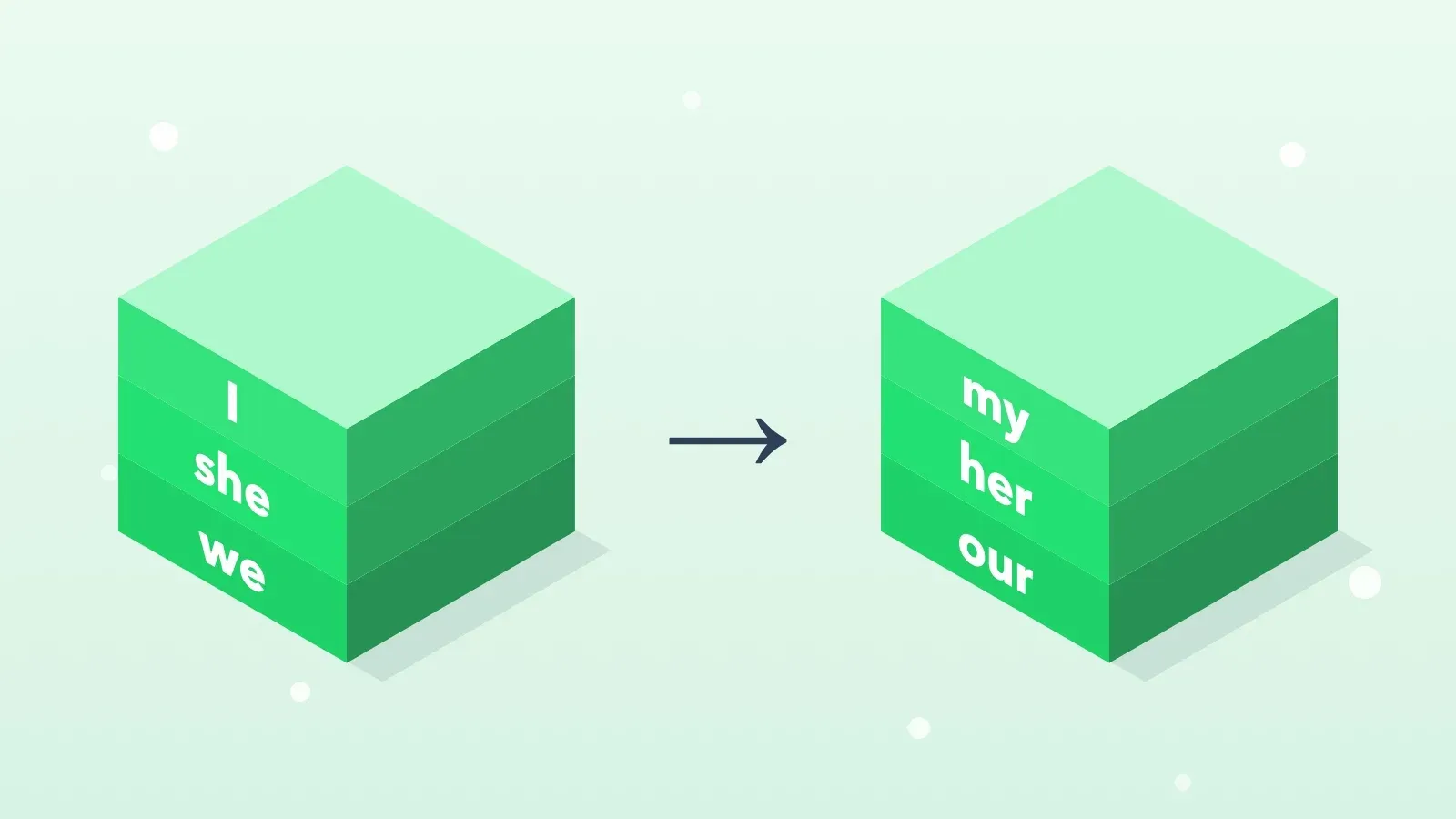
Subject pronouns and possessive adjectives: I, my, she, her
 A1DrillsGrammar Practice · A1
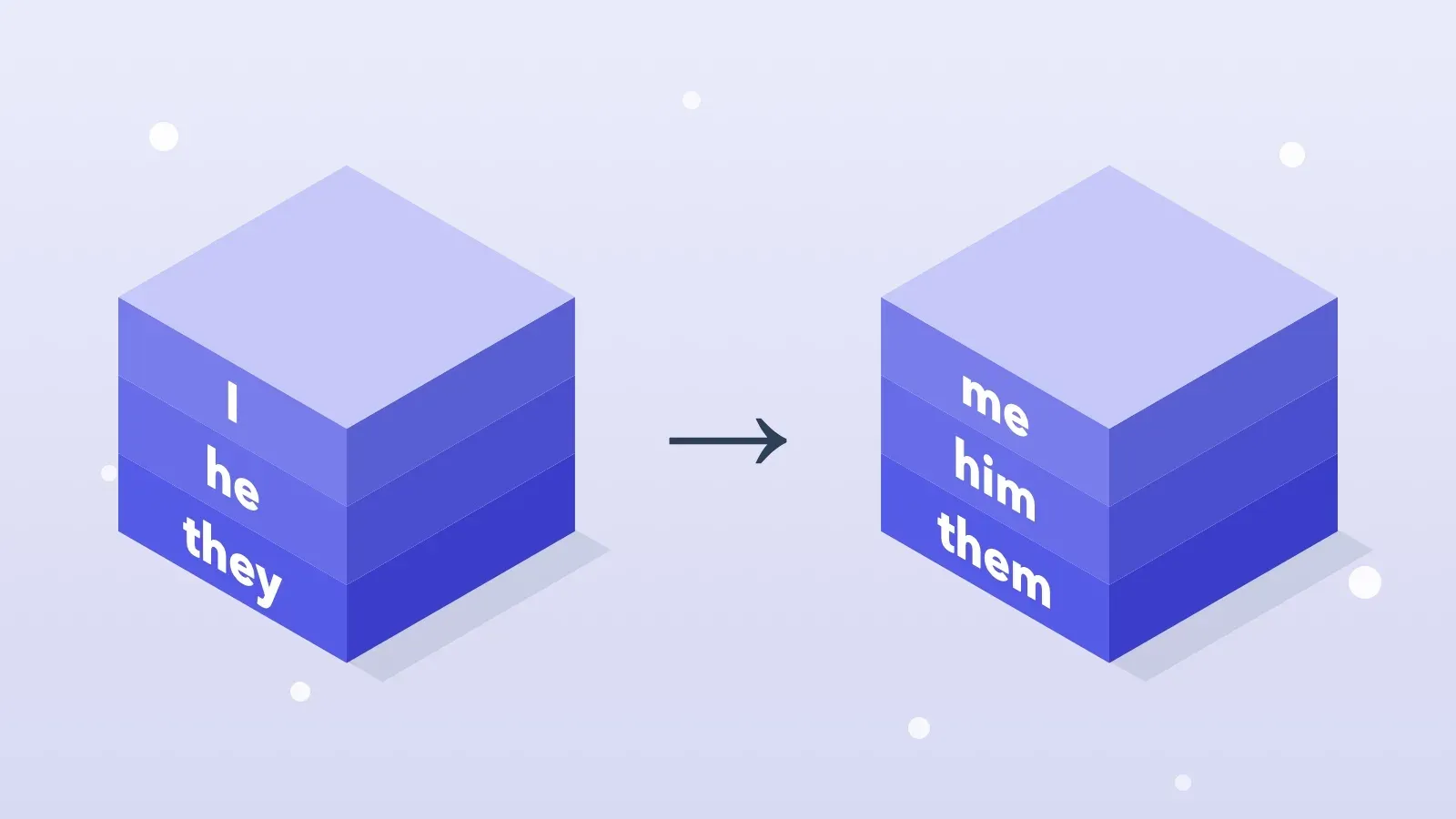
Object pronouns: me, him, her, them
 A2Lesson planEnglish A2.1
Be brave and try
 A2Lesson planEnglish A2.1
Take a book, leave a book
 A2Lesson planEnglish A2.2
Giant balloons over Manhattan
 A2DrillsGrammar Practice · A2
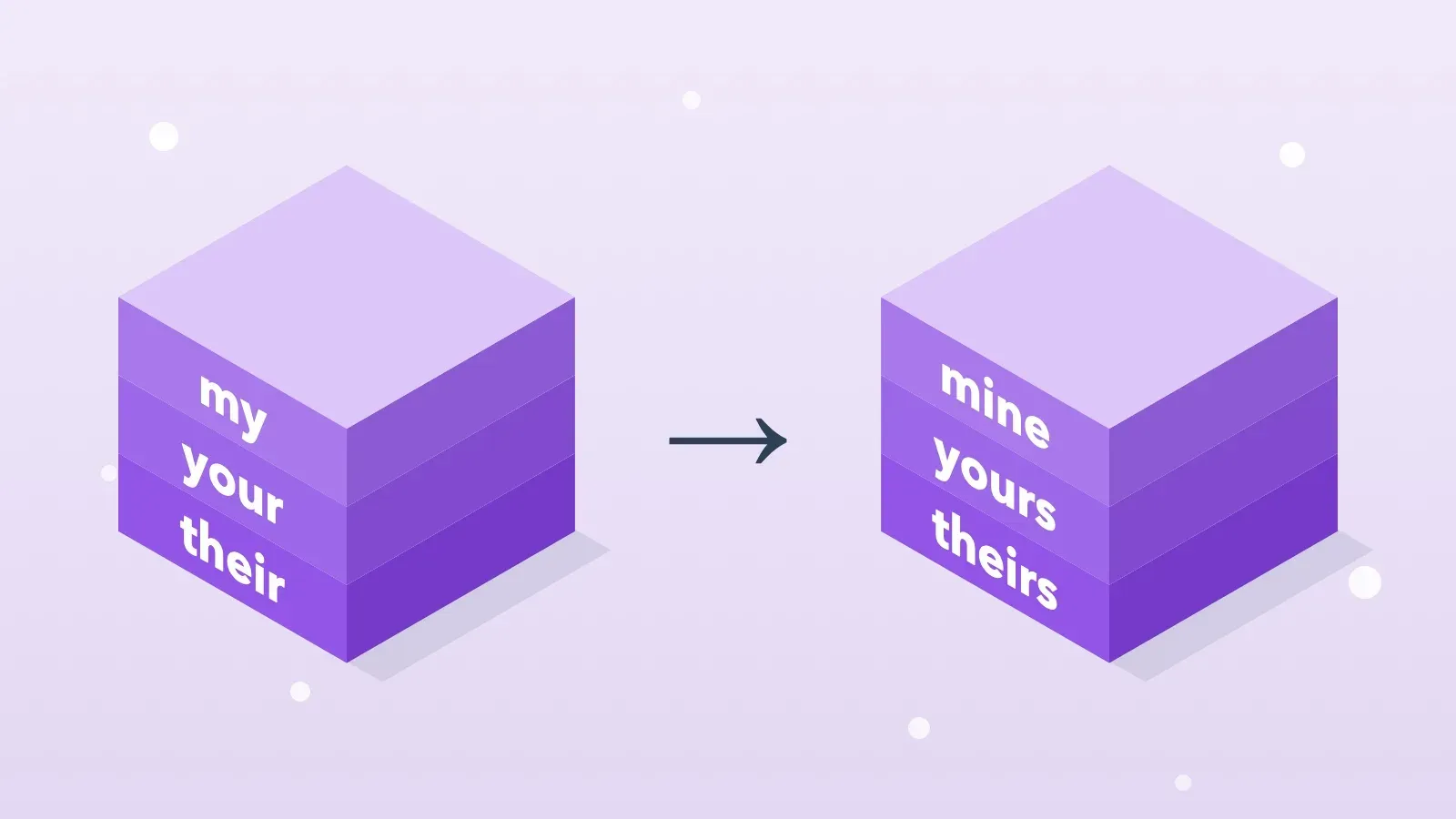
Possessive pronouns: whose is it?
 B1DrillsGrammar Practice · B1
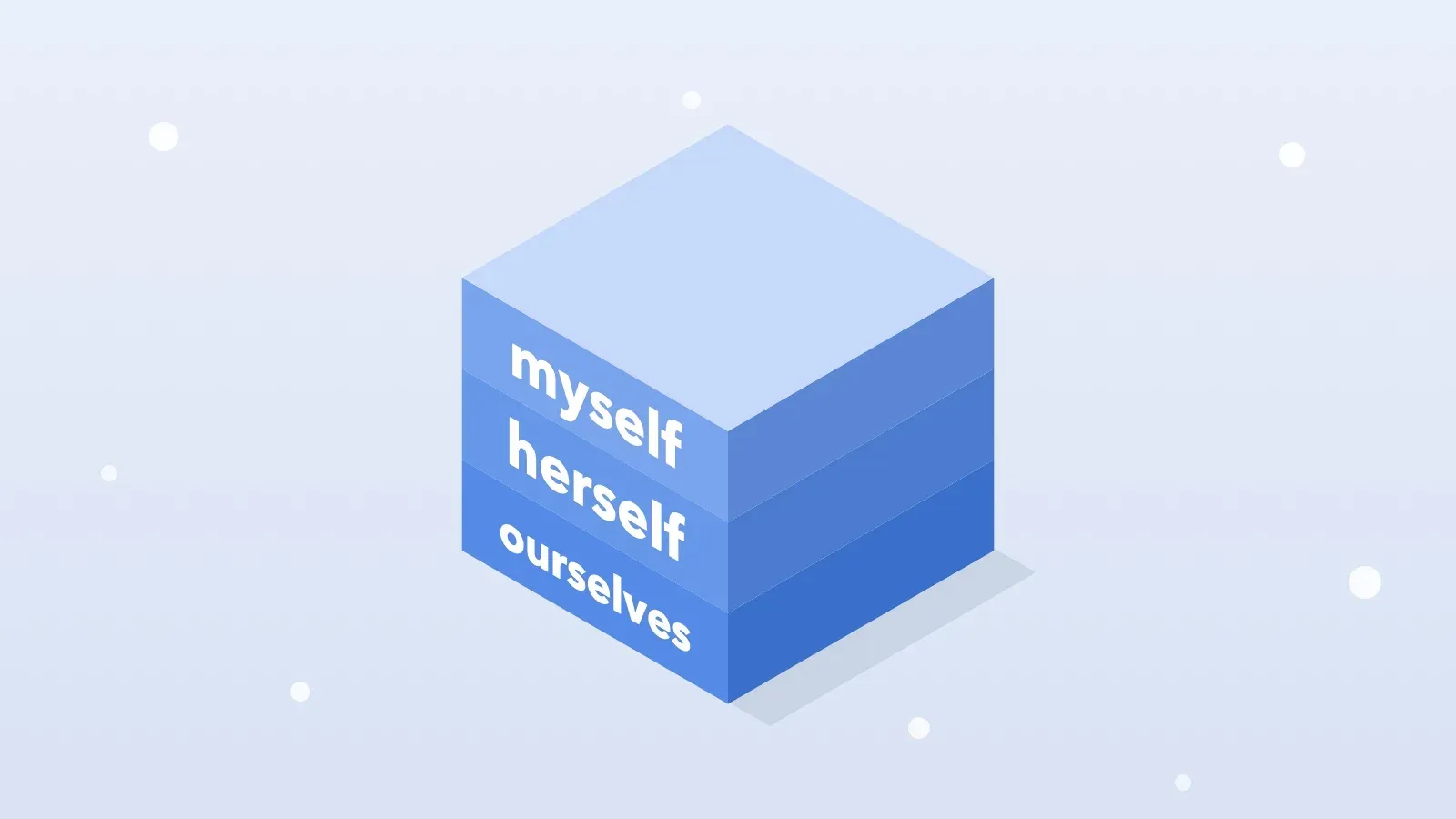
Reflexive pronouns: did you make it yourself?
Try the pronouns exercises
One exercise from each of 6 lessons. These are the same exercises your students do in edio.
Pronouns explained
A pronoun replaces a noun once it's clear who or what we mean. English pronouns change with their job in the sentence: I before the verb, me after it, myself when the action comes back to the subject, and someone or nothing when we don't say who or what.
Subject pronouns: I, you, he, she, it, we, they
Subject pronouns come before the verb and say who does or is something: He's Danny, They're BFFs. The table pairs each one with its possessive partner (he → his, they → their), so learners meet both forms side by side.
| I, you, he… | my, your, his… | Example |
|---|---|---|
| I | my | I'm Olivia. My best friend is Hannah. |
| you | your | You're Jack. Your best friend is Danny. |
| he | his | He's Danny. His dog is Taco. |
| she | her | She's Priya. Her best friend is Nina. |
| it | its | It's a dog. Its ears are big. |
| we | our | We're roommates. Our house is in Brooklyn. |
| they | their | They're BFFs. Their photo is cute. |
From the lesson National Best Friends Day (English A1.1)
Object pronouns: me, him, her, us, them
After a verb, or after for, with, to and from, English uses the object form: She helps me, This card is for you. Only you and it look the same in both places; he becomes him, and they becomes them.
I → me, he → him: every person
| Before the verb | After a verb or for, with, to | Example |
|---|---|---|
| I | me | Can you help me? |
| you | you | This card is for you. |
| he | him | Thank him! |
| she | her | We love her. |
| it | it | A card? I love it! |
| we | us | Tell us a story! |
| they | them | Give them a card. |
Who does it? Who gets it?
Before the verb: I, he, she, we, they
- She helps me.
- We love him.
- They thank us.
After the verb: me, him, her, us, them
- I help her.
- He loves us.
- We thank them.
From the lesson Thank you, teacher! (English A1.2)
Reflexive pronouns and each other
Reflexive pronouns end in -self or -selves and point back at the subject: Nora was proud of herself. When people do something to one another, English uses each other instead: Tia and Jamal looked at each other.
Every person
| Who | -self / -selves | Example |
|---|---|---|
| I | myself | I taught myself to swim. |
| you (one person) | yourself | Believe in yourself, Nora! |
| he | himself | Jamal taught himself the long jump. |
| she | herself | Nora was proud of herself. |
| it | itself | The door opened by itself. |
| we | ourselves | We enjoyed ourselves in Chicago. |
| you (two or more) | yourselves | Kids, enjoy yourselves! |
| they | themselves | The kids made dinner themselves. |
-selves or each other?
themselves: A → A, B → B
- Tia and Jamal looked at themselves in the water. (Tia looked at Tia. Jamal looked at Jamal.)
each other: A → B, B → A
- Tia and Jamal looked at each other. (Tia looked at Jamal. Jamal looked at Tia.)
- They cheer for each other, help each other and hug each other.
From the lesson Be brave and try (English A2.1)
Someone, anything, nobody, everyone
Indefinite pronouns follow the rules of some and any: someone in positive sentences, anything in questions and after not. A sentence takes one negative only, so it's I didn't find anything or I found nothing, never I didn't find nothing.
some-, any-, no-, every-
| Start | People | Things | When? |
|---|---|---|---|
| some- | someone, somebody | something | positive sentences: Someone left a book. |
| any- | anyone, anybody | anything | questions and not: Did anyone call? I didn't find anything. |
| no- | no one, nobody | nothing | a positive verb, no not: Nobody took it. |
| every- | everyone, everybody | everything | all the people or things: Everyone can leave something. |
Two ways to say no: one negative only!
not + any-
- I didn't find anything.
- There isn't anyone at the box.
- We don't pay anything.
no- + a positive verb
- I found nothing.
- There's nobody at the box.
- Nobody pays anything. (any- after no-)
From the lesson Take a book, leave a book (English A2.1)
One and ones in place of the noun
One and ones replace a noun we've just used: I like the blue one, Then tie the long ones. Use one for a single thing and ones for two or more. After a or an, only one works: a big one.
Don't say the noun twice!
The noun again 😕
- I don't like the red balloon. I like the blue balloon.
- The short ropes are new. The long ropes are old.
one / ones 😊
- I don't like the red balloon. I like the blue one.
- The short ropes are new. The long ones are old.
one or ones?
| Before it | one: one thing | ones: two or more |
|---|---|---|
| a / an + adjective | a big one | no a / an: big ones |
| the + adjective | the yellow one | the yellow ones |
| my favorite, the first | my favorite one, the first one | my favorite ones, the first ones |
| Which…? | Which one is yours? | Which ones are yours? |
| the … with … | the one with the red rope | the ones with the green hats |
From the lesson Giant balloons over Manhattan (English A2.2)
Questions about pronouns
What kinds of pronouns are there in English?
Are there interactive pronoun exercises?
What's the difference between subject and object pronouns?
When do you use reflexive pronouns?
What's the difference between themselves and each other?
What are indefinite pronouns?
Is it everyone is or everyone are?
How do I teach pronouns to ESL students?
What are good object pronoun activities?
Can I use these pronoun lessons with one student?
More English grammar
Lessons for every grammar point, from the verb to be to reported speech. All grammar points