Present simple vs present continuous: ESL lesson plans and exercises
Levels A1 to B2 5 lesson plans · 1 drill lesson Exercises that check themselves
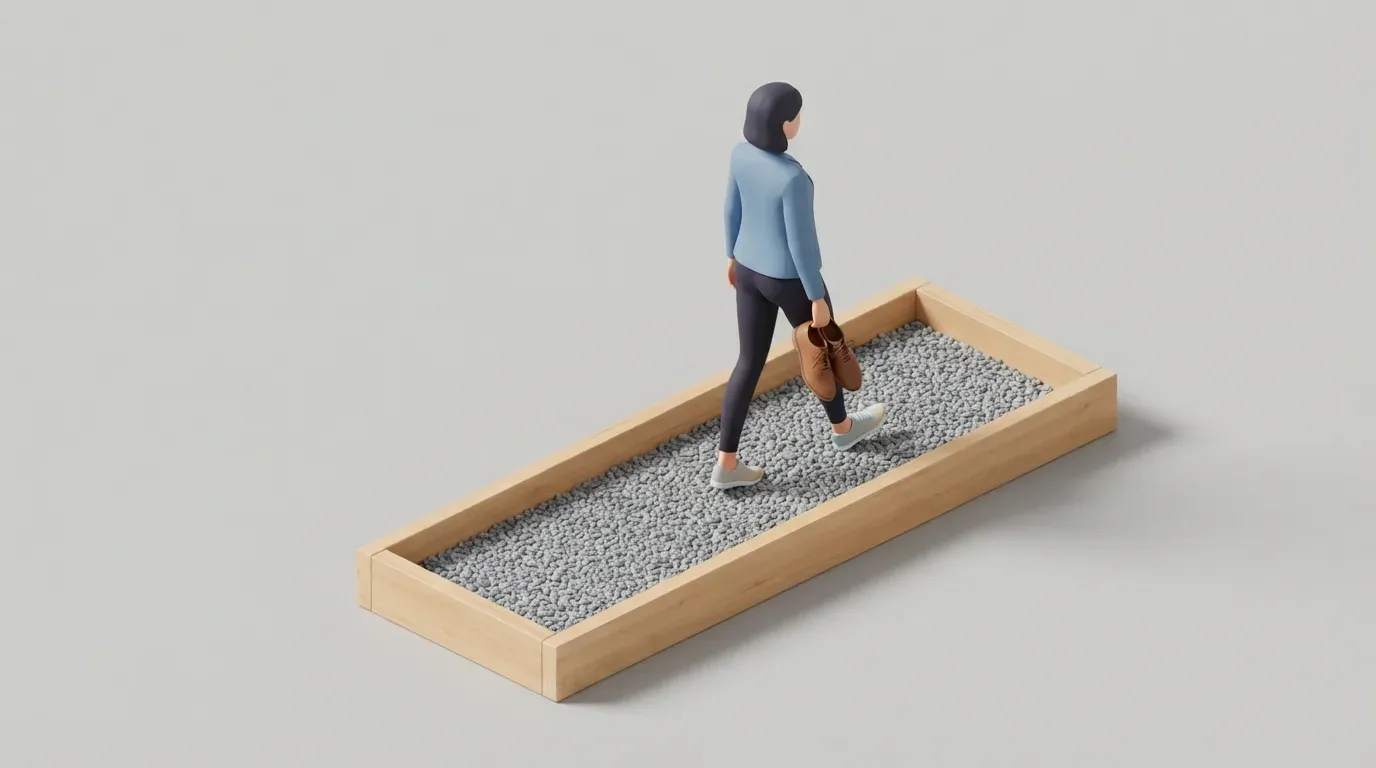
The present simple tells what usually happens or is always true (She makes sounds for movies), and the present continuous what is happening now or for a while (Right now she's walking in the gravel pit). This page collects 5 ready-made lessons from the edio.ai library that teach the two tenses side by side, levels A1 to B2, all in American English. Try exercises from them, compare the forms and uses in their grammar schemes, and pick a lesson for your class by level.
Present simple vs present continuous lesson plans and drills
5 lesson plans and 1 drill lesson, A1 to B2. Lesson plans are whole lessons with reading, listening and speaking; drill lessons are 46 self-checking exercises with no new words.
 A1Lesson planEnglish A1.2
Who makes the sounds in movies?
 A1DrillsGrammar Practice · A1
Present simple or present continuous: every day or now?
 B1Lesson planEnglish B1.1
Would you review a book on TV?
 B1Lesson planEnglish B1.1
Who's that runner coming from behind?
 B1Lesson planEnglish for IT B1
Why is it called a scrum?
 B2Lesson planBusiness English B2
Making Contacts
Try the present simple vs continuous exercises
One exercise from each of 6 lessons. These are the same exercises your students do in edio.
Present simple vs present continuous explained
Both tenses describe the present, but they do different jobs. A routine, a job, a fact or a timetable takes the present simple: We review pull requests after lunch. An action in progress or a temporary situation takes the present continuous: This sprint I'm working on the login page. The forms differ, too: do and does against am, is or are + -ing.
A job and a routine, or this moment?
Tess's job and routine take the present simple: She records footsteps every day. What she and Felix are doing at this moment takes the present continuous: Look! Felix is knocking on the door, He isn't eating. He's making a sound!
Present simple: jobs, routines, facts
- Tess makes sounds for movies.
- She records footsteps every day.
- Does she wear boots? – Yes, she does.
Present continuous: now
- Right now she's walking in the gravel pit.
- Look! Felix is knocking on the door.
- He isn't eating. He's making a sound!
From the lesson Who makes the sounds in movies? (English A1.2)
What do you do? or What are you doing?
The two questions look alike but ask different things. What does she do? wants a job (She's a Foley artist); What's she doing? wants the action now. Keep each pattern whole: do + verb or is + verb-ing, never What does she doing?
| Question | It asks about… | Answer |
|---|---|---|
| What does she do? | her job | She's a Foley artist. She makes sounds for movies. |
| What's she doing? | now | She's walking in the gravel pit. |
| What do you do? | your job or school | I'm a student. I study English. |
| What are you doing? | now | I'm reading a book. |
From the lesson Who makes the sounds in movies? (English A1.2)
This week, this sprint: temporary work
At B1, the present continuous also covers work in progress around now, not just this second: This week Jordan is testing the payouts screen. How the team always works stays simple: The sprint lasts two weeks. The second table sorts the time words.
Two present tenses
| Tense | Form | Use it for | Example |
|---|---|---|---|
| Present simple | I / you / we / they test; he / she / it tests; don't / doesn't test; Do / Does… test? | routines, habits, facts, timetables | We review pull requests after lunch. |
| Present continuous | am / is / are + verb-ing: I'm testing; isn't / aren't testing; Are you testing…? | actions now; temporary work this week or this sprint | This sprint I'm working on the login page. |
Time words
| With the present simple | With the present continuous |
|---|---|
| usually, always, often, never | right now, now, at the moment |
| every day, every sprint, on Mondays | this week, this sprint, currently |
| every other Monday, once a week | today (work in progress), Look! |
From the lesson Why is it called a scrum? (English for IT B1)
Facts and schedules, projects and trends
The present simple also gives company facts and schedules: The fair opens at nine every morning. The present continuous adds current projects and changes: We're expanding into Europe, More and more guests are asking for better coffee.
Present simple: facts and routines
- Jobs and permanent facts: I work for Kade Hotels.
- Routines: We roast coffee six days a week.
- Company facts: Wrenfield supplies about 300 businesses in Oregon and Washington.
- Schedules: The fair opens at nine every morning.
- Asking about a job: What do you do?
Present continuous: now and for a while
- Right now: We're pouring our Ethiopian this morning.
- Temporary situations: Claire is staying in Amsterdam this week.
- Current projects: We're expanding into Europe.
- Trends and changes: More and more guests are asking for better coffee.
- Asking about now: What are you doing?
From the lesson Making Contacts (Business English B2)
State verbs stay simple
Need, want, know, understand, depend and belong describe states, so they normally keep the present simple even with right now: I need access to the repo, not I'm needing.
- need, want, know, understand, mean, depend, belong, like
- I need access to the repo. (not I'm needing)
- Sorry, I don't know who owns this ticket.
- The release date depends on the test results.
From the lesson Why is it called a scrum? (English for IT B1)
Think, have, see: a state or an action
A few verbs have two meanings. I think it's excellent is an opinion, but We're thinking about a new supplier means considering; We have twelve cafés is owning, while I'm having lunch with a buyer is an activity.
| Verb | State: simple | Action: continuous |
|---|---|---|
| think | opinion: I think it's excellent. | considering: We're thinking about a new supplier. |
| have | own: We have twelve cafés. | eat, do, take part: I'm having lunch with a buyer. |
| see | understand: I see what you mean. | meet: I'm seeing a lot of buyers this week. |
From the lesson Making Contacts (Business English B2)
Questions about the present simple and the present continuous
What is the difference between the present simple and present continuous?
Are there interactive present simple and present continuous exercises?
Which signal words go with each tense?
How do I teach the present simple and present continuous together?
What are state verbs, and why don't they take -ing?
Can the present continuous describe something that isn't happening this second?
What mistakes do students make with the two tenses?
What's a good speaking activity for the two tenses?
Do these lessons work one-to-one and as homework?
More English grammar
Lessons for every grammar point, from the verb to be to reported speech. All grammar points