Comparatives and superlatives: ESL lesson plans and exercises
Levels A2 to C1 11 lesson plans · 4 drill lessons Exercises that check themselves
Comparatives set two things side by side (hotter than, more peaceful than), while superlatives name number one in a group: the highest peak in North America. This page brings together 11 ready-made lessons on both from the edio.ai library, levels A2 to C1, in American English, from chile peppers to a product launch. Try exercises taken from them, see the rules in their grammar schemes and pick the lesson that fits your class. They're interactive throughout, and the practice exercises mark every answer.
Comparatives and superlatives lesson plans and drills
11 lesson plans and 4 drill lessons, A2 to C1. Lesson plans are whole lessons with reading, listening and speaking; drill lessons are 45 to 46 self-checking exercises with no new words.
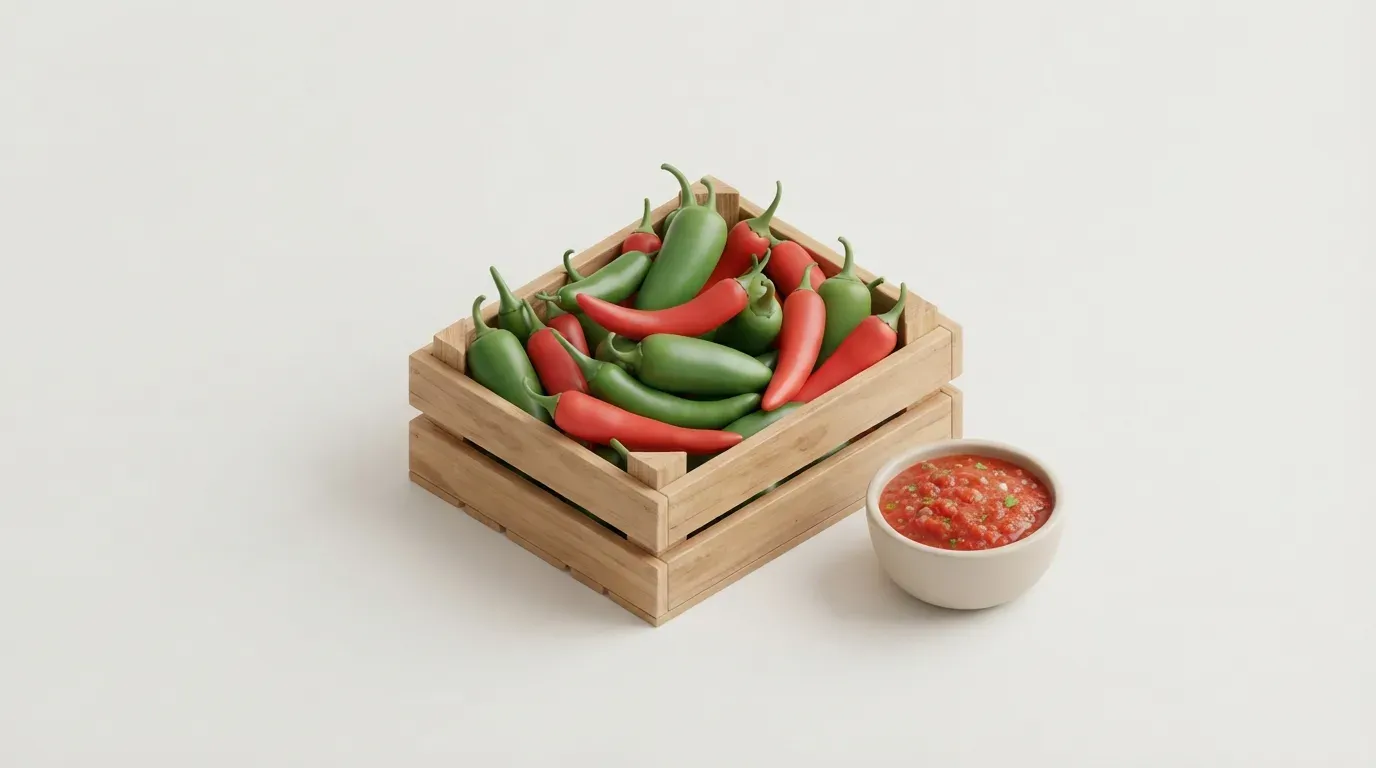 A2Lesson planEnglish A2.1
Is a jalapeño hotter than a habanero?
 A2Lesson planEnglish A2.1
The island with no cars
 A2Lesson planEnglish A2.1
America's extremes
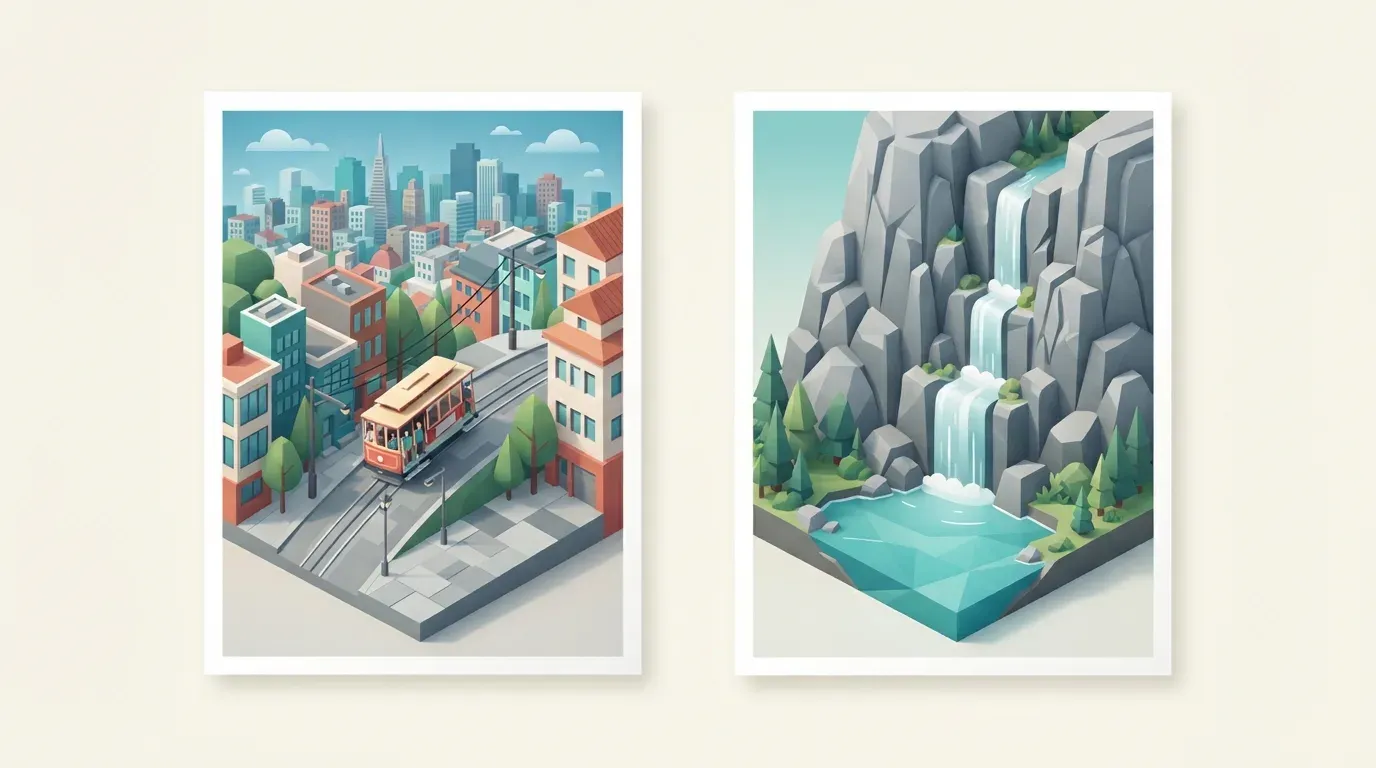 A2Lesson planEnglish A2.1
San Francisco or Yosemite? You choose!
 A2Lesson planEnglish A2.2
The longest cave in the world
 A2DrillsGrammar Practice · A2
Comparatives: which one is better?
 A2DrillsGrammar Practice · A2
Superlatives: the best in town
 A2DrillsGrammar Practice · A2
As … as, too, enough: is it the right size?
 B1Lesson planEnglish B1.1
The internet's first word was “LO”
 B1Lesson planEnglish B1.2
Why did Carver tell farmers to plant peanuts?
 B1Lesson planEnglish for IT B1
Explain it in ten hundred words
 B1DrillsGrammar Practice · B1
Advanced comparatives: the more, the better
 B2Lesson planBusiness English B2
Launching a Product
 B2Lesson planEnglish B2.2
A lottery to see fireflies
 C1Lesson planEnglish for IT C1
System Design: Every Choice Has a Cost
Try the comparative and superlative exercises
One exercise from each of 6 lessons. These are the same exercises your students do in edio.
Comparatives and superlatives explained
We use a comparative to compare two things and a superlative to rank one thing above all the others in its group. Short adjectives add -er and -est (cold, colder, the coldest), long ones take more and the most, and good, bad and far have forms of their own: better, the best.
Short adjectives: -er + than
A short adjective adds -er, and than comes before the second thing: Bell peppers are sweeter than jalapeños. Spelling changes in three cases: nice adds just -r, hot doubles its last letter (hotter), and spicy becomes spicier.
Compare two things
thing 1 + is / areadjective + -erthan + thing 2
A habanero is hotter than a jalapeño.
Bell peppers are sweeter than jalapeños.
How to spell it
| Adjective | Rule | Comparative |
|---|---|---|
| mild, sweet, cold | + er | milder, sweeter, colder |
| nice, safe | ends in e: + r | nicer, safer |
| hot, big, sad | ends in one vowel + one consonant (h-o-t): double the last letter + er | hotter, bigger, sadder |
| spicy, easy, busy | ends in y: y → ier | spicier, easier, busier |
From the lesson Is a jalapeño hotter than a habanero? (English A2.1)
Long adjectives: more and less, plus better and worse
Longer adjectives take more (more peaceful), and less gives the opposite with any adjective: less noisy, less crowded. No adjective takes both -er and more. Good, bad and far become better, worse and farther.
Short or long?
short: + -er
- slow → slower, small → smaller
- big → bigger, hot → hotter
- busy → busier, noisy → noisier
- quiet → quieter
long: more + adjective (+)
- peaceful → more peaceful
- beautiful → more beautiful
- crowded → more crowded
- relaxing → more relaxing
the opposite: less + adjective (−)
- noisy → less noisy
- crowded → less crowded
- expensive → less expensive
good, bad, far: new words
| Adjective | Compare | Example |
|---|---|---|
| good | better | For the loop road, a bike is better than a carriage. |
| bad | worse | Marco's jokes are bad, but Biscuit's singing is worse! |
| far | farther | The bike shop is far, but the fudge shop is farther! |
From the lesson The island with no cars (English A2.1)
Superlatives: the + -est or the most
A superlative puts one thing first in a group, and the comes before it: the hottest, the most famous, the least comfortable. A place after it usually takes in, not of: Denali is the highest peak in North America.
Two things or number one?
Two things: comparative + than
- Death Valley is hotter than Utqiagvik.
- Denali is higher than a skyscraper!
Number one in a group: the + superlative
- The NPS says Death Valley is the hottest place on Earth.
- Denali is the highest peak in North America.
Long adjectives: the most, the least
| Adjective | Superlative | Example |
|---|---|---|
| famous | the most famous | Biscuit is the most famous star on our channel! |
| beautiful | the most beautiful | For me, Badwater is the most beautiful place in the park. |
| interesting | the most interesting | Utqiagvik is the most interesting city on our list. |
| comfortable | the least comfortable (the opposite of the most) | The Toaster has the least comfortable beds in America! |
From the lesson America's extremes (English A2.1)
As … as: the same, or less
As + adjective + as means two things are equal, and with not, the first is less: Yosemite isn't as busy as San Francisco, so San Francisco is busier. The adjective stays plain, and the pattern ends in as, never than.
The same
asadjectiveas
The city is as beautiful as the park.
Biscuit is as hungry as a bear!
Two ways, one idea
-er than / more … than
- Yosemite is quieter than the city.
- The city is busier than the park.
- The park is more peaceful than the city.
not as … as
- The city isn't as quiet as Yosemite.
- The park isn't as busy as the city.
- The city isn't as peaceful as the park.
From the lesson San Francisco or Yosemite? You choose! (English A2.1)
The best … I've ever …
For a top experience, a superlative pairs with the present perfect: It's the longest cave I've ever seen. The pattern is have or has + ever + a past participle, as in the best stew we've ever eaten, and the word is ever, not never.
thesuperlativenounperson + have / has everpast participle
It's the longest cave I've ever seen.
That was the best stew we've ever eaten.
This is the darkest place she has ever been.
From the lesson The longest cave in the world (English A2.2)
How big is the difference? Much, far, slightly
B2 learners say how big the gap is: far cheaper or much cheaper for a big one, slightly cheaper or a bit cheaper for a small one, and even more for one step further. Very never goes before a comparative.
| Difference | Modifier + comparative | Example |
|---|---|---|
| big | much, far, a lot (informal), considerably, significantly (formal) | At $0.80, the supermarket can is far cheaper than ours at $1.60. |
| small | slightly, a bit (informal), a little | At $1.60, ours is slightly cheaper than the New York chain's bottle at $1.80. |
| one step further | even + comparative | Ours costs more than the supermarket can, and the New York chain's costs even more. |
| none | no + comparative + than | Both are aluminum cans: ours is no more recyclable than theirs. |
From the lesson Launching a Product (Business English B2)
Questions about comparatives and superlatives
How do you form comparatives and superlatives?
What's the difference between a comparative and a superlative?
How do I teach comparatives and superlatives to A2 students?
What are good comparative and superlative games?
Are there interactive comparative and superlative exercises?
When do you use as … as?
When do you use less and fewer?
What are common mistakes with comparatives and superlatives?
Do these comparative and superlative lessons work one-to-one?
More English grammar
Lessons for every grammar point, from the verb to be to reported speech. All grammar points