Present continuous: ESL lesson plans and exercises
Levels A1 to B2 8 lesson plans · 2 drill lessons Exercises that check themselves
The present continuous is the tense for actions in progress, now or around now: It's raining, They're playing baseball, What are you doing? Here are 8 ready-made lessons on it from the edio.ai library, levels A1 to B2, all interactive and in American English. Play exercises from them, see the form and its uses in their grammar schemes, and find a lesson for your class in the list by level, from a first I'm watching the game to weekend arrangements and state verbs at work.
Present continuous lesson plans and drills
8 lesson plans and 2 drill lessons, A1 to B2. Lesson plans are whole lessons with reading, listening and speaking; drill lessons are 44 to 45 self-checking exercises with no new words.
 A1Lesson planEnglish A1.2
Baseball at midnight?
 A1Lesson planEnglish A1.2
What's the bear doing now?
 A1Lesson planEnglish A1.2
Who makes the sounds in movies?
 A1DrillsGrammar Practice · A1
Present continuous: what's happening now?
 A2Lesson planEnglish A2.1
Music on every street
 A2Lesson planEnglish A2.1
Across America by train
 A2DrillsGrammar Practice · A2
Present continuous for plans: what are you doing tonight?
 B1Lesson planEnglish B1.1
Who's that runner coming from behind?
 B1Lesson planEnglish for IT B1
Why is it called a scrum?
 B2Lesson planBusiness English B2
Making Contacts
Try the present continuous exercises
One exercise from each of 6 lessons. These are the same exercises your students do in edio.
Present continuous explained
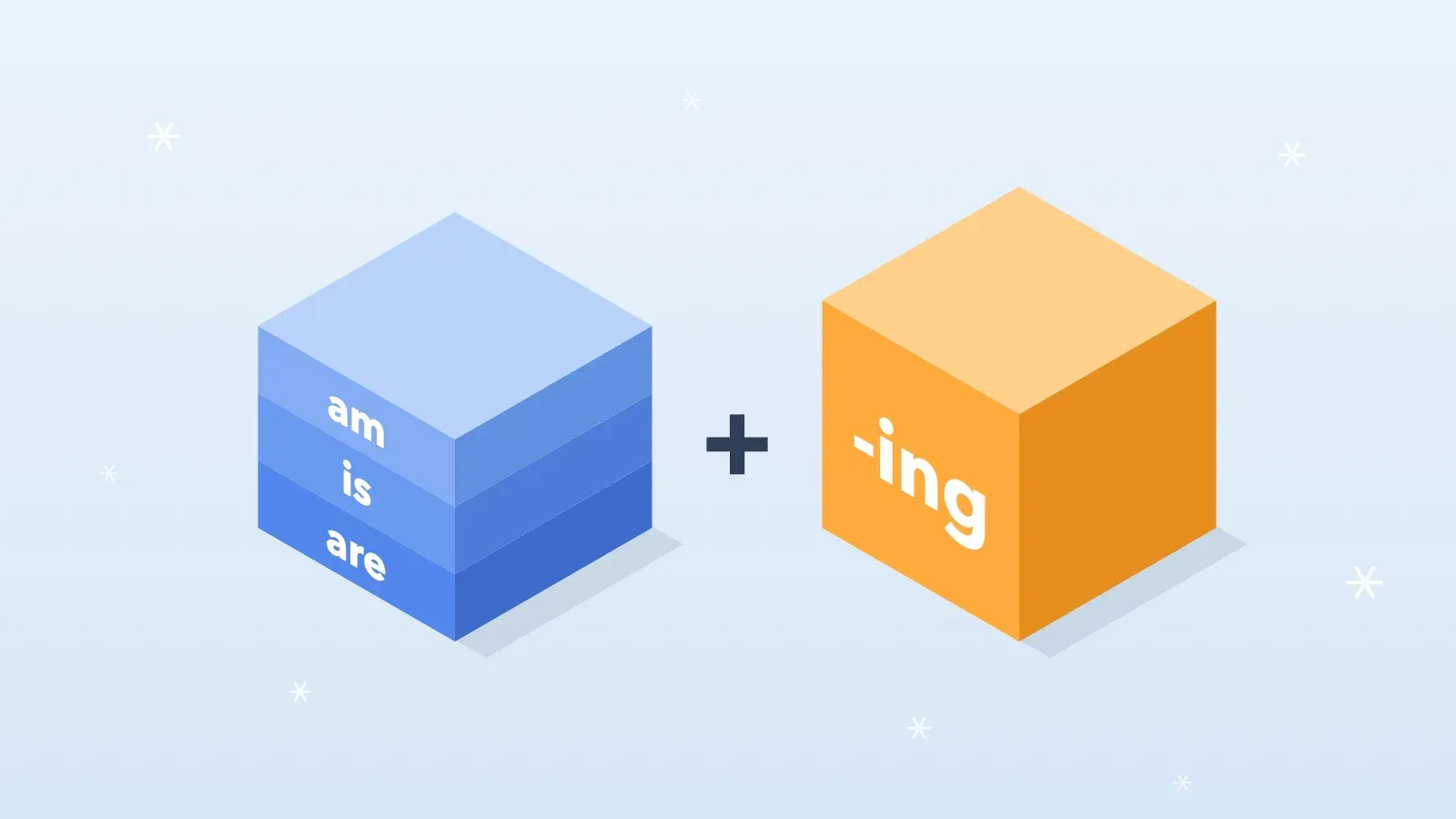
We use the present continuous for what is happening as we speak (Look! The pitcher is throwing the ball) and for temporary situations around now (This week Jordan is testing the payouts screen). It has two parts: am, is or are, then the verb + -ing. With a future time, it describes arrangements: We're rehearsing tonight at seven.
Am, is or are + verb-ing
The form of be matches the subject, and the main verb adds -ing: I'm watching the game, The sun is shining. The table runs through every person in long and short form.
Now: am / is / are + verb-ing
I / you / he / she / it / we / theyam / is / areverb + -ing
The sun is shining.
They're playing baseball.
I'm watching the game.
am, is, are + -ing: every person
| Who | Long form | Short form |
|---|---|---|
| I | I am playing. | I'm playing. |
| you | You are playing. | You're playing. |
| he | He is playing. | He's playing. |
| she | She is playing. | She's playing. |
| it | It is raining. | It's raining. |
| we | We are playing. | We're playing. |
| they | They are playing. | They're playing. |
From the lesson Baseball at midnight? (English A1.2)
-ing spelling: making, running, playing
Most verbs simply add -ing: eating, watching. A final -e drops (write, writing), though see gives seeing. When a short verb ends in one vowel and one consonant, the consonant doubles: swim, swimming. W and y never do: throwing, playing.
| Rule | Examples |
|---|---|
| Most verbs: + ing | play → playing, throw → throwing, eat → eating, watch → watching |
| Verb + e: drop the e, + ing | make → making, shine → shining, write → writing (but: see → seeing) |
| Short verb, one vowel + one consonant at the end: double the last letter | run → running, swim → swimming, sit → sitting, clap → clapping (not w or y: throwing, playing) |
From the lesson Baseball at midnight? (English A1.2)
Negatives and questions without do
Not goes straight after am, is or are (It isn't swimming), and questions put that verb before the subject: Is it sleeping? There's no do or does anywhere, and short answers drop the -ing: Yes, it is, No, I'm not.
✗ Say no: am / is / are + not + verb-ing
| Who | Long form | Short form |
|---|---|---|
| I | I am not sleeping. | I'm not sleeping. |
| you | You are not swimming. | You aren't swimming. |
| he | He is not cooking. | He isn't cooking. |
| she | She is not reading. | She isn't reading. |
| it | It is not fishing. | It isn't fishing. |
| we | We are not watching TV. | We aren't watching TV. |
| they | They are not eating. | They aren't eating. |
Questions and short answers: every person
| Who | Question | Short answers |
|---|---|---|
| I | Am I doing it right? | Yes, you are. / No, you aren't. |
| you | Are you watching the cam? | Yes, I am. / No, I'm not. |
| he | Is he cooking? | Yes, he is. / No, he isn't. |
| she | Is she reading? | Yes, she is. / No, she isn't. |
| it | Is it sleeping? | Yes, it is. / No, it isn't. |
| we | Are we going home? | Yes, we are. / No, we aren't. |
| they | Are they fishing? | Yes, they are. / No, they aren't. |
From the lesson What's the bear doing now? (English A1.2)
Signal words: now or every day?
Now, right now, at the moment, Look! and Listen! call for the present continuous: Look! It's snowing. Routine words such as every morning, on Sundays and usually belong to the present simple: It usually snows in January.
Present simple
- every day, every morning
- on Mondays, on Sundays
- usually, always, often, never
Present continuous
- now, right now
- at the moment
- Look! Listen!
From the lesson Who makes the sounds in movies? (English A1.2)
Arrangements: the present continuous for the future
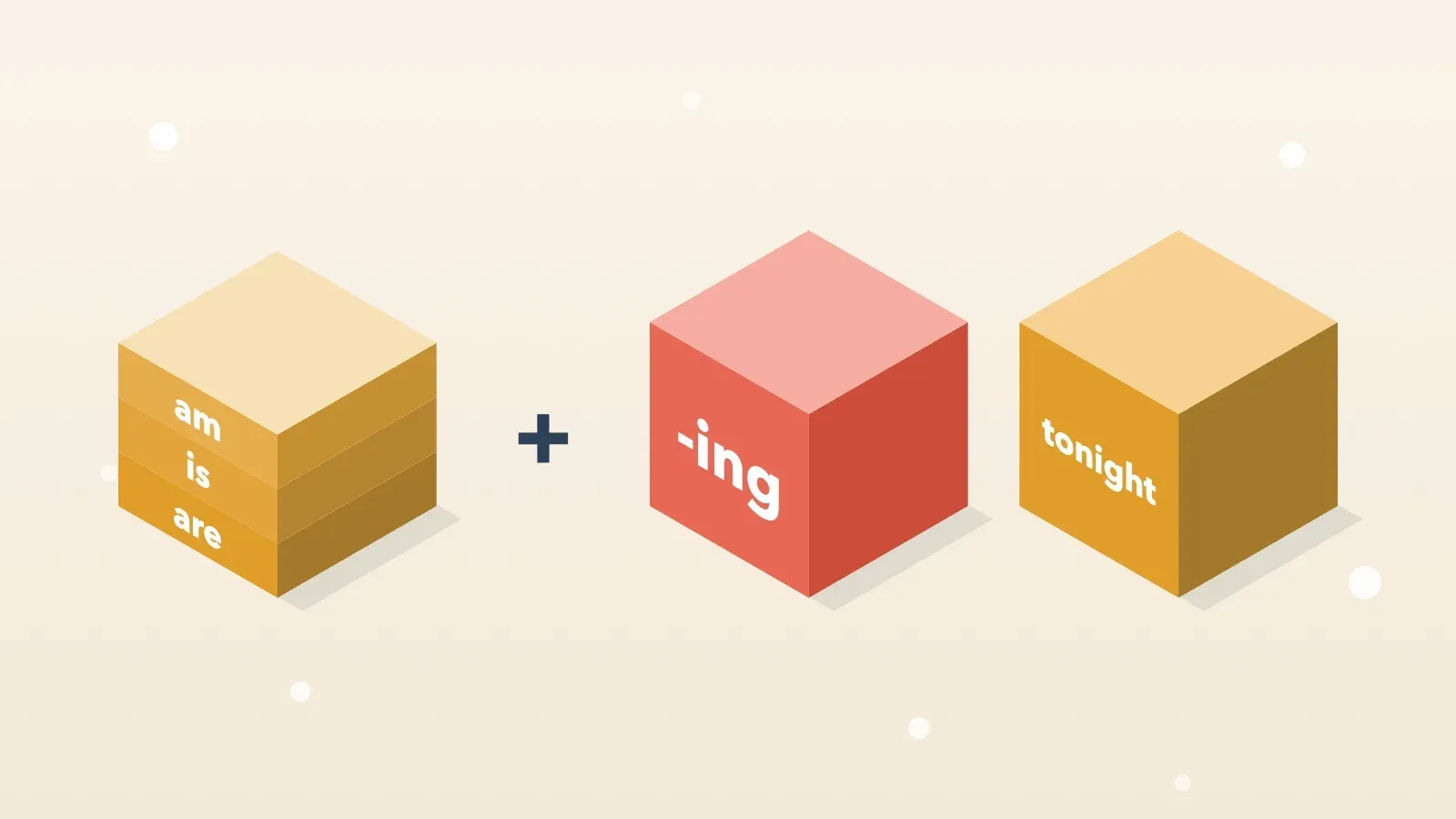
Add a future time and the same form gives an arrangement, a plan with a time, a place and other people: Tessa is performing at noon tomorrow. So The choir is singing can mean now or later, and the time word shows which.
An arrangement
am / is / areverb + -inga time word
Tessa is performing at noon tomorrow.
We're rehearsing tonight at seven.
The same form: look at the time word!
Now
- Look! Tessa is playing the guitar right now.
- Shh! The choir is singing.
- now, right now, Look!, Listen!, Shh!
Later: an arrangement
- Tessa is playing on her stoop at noon tomorrow.
- The choir is singing at two on June 21.
- tonight, tomorrow, this evening, on Saturday, at six
From the lesson Music on every street (English A2.1)
State verbs: no -ing, even right now
Verbs for knowing, wanting, owning and other states normally stay simple, even about this moment: We need a new supplier, not We are needing; It depends on the price, not It's depending. The table groups them by meaning.
| Meaning | Verbs | Example |
|---|---|---|
| Knowing and believing | know, believe, understand, mean | I know that coffee. (not I'm knowing) |
| Wanting and liking | want, need, prefer, like, love | We need a new supplier. (not we are needing) |
| Owning | own, belong, have (= own) | Kade has twenty-eight hotels. The grinder belongs to the fair. |
| Other states | seem, depend | It depends on the price. (not it's depending) |
From the lesson Making Contacts (Business English B2)
Questions about the present continuous
When do we use the present continuous?
How do you form the present continuous?
Is the present progressive the same as the present continuous?
Are there interactive present continuous exercises?
How do I teach the present continuous to beginners?
What are good present continuous games and speaking activities?
How is the present continuous used for the future?
Which verbs don't usually take the present continuous?
Present continuous or present simple: how do learners choose?
Can I teach these lessons one-to-one or set them as homework?
More English grammar
Lessons for every grammar point, from the verb to be to reported speech. All grammar points