Gerunds and infinitives: ESL lesson plans and exercises
Levels A1 to B2 18 lesson plans · 7 drill lessons Exercises that check themselves
A gerund is the -ing form of a verb (dancing), and an infinitive is to + the base form (to dance). Which one comes next depends on the first verb: I enjoy dancing, but I want to dance. This page lists 18 ready-made lessons on gerunds and infinitives from the edio.ai library, levels A2 to B2, from jazz in New Orleans to chairing a meeting. Try their -ing and to exercises, compare the verb patterns in the grammar schemes, and choose a lesson by level; each one is interactive and in American English.
Gerunds and infinitives lesson plans and drills
18 lesson plans and 7 drill lessons, A1 to B2. Lesson plans are whole lessons with reading, listening and speaking; drill lessons are 43 to 46 self-checking exercises with no new words.
 A1DrillsGrammar Practice · A1
Like, love, hate + -ing: I love dancing
 A2Lesson planEnglish A2.1
Where jazz was born
 A2Lesson planEnglish A2.1
An orchestra for every kid
 A2Lesson planEnglish A2.1
Never give up: from farm fields to space
 A2DrillsGrammar Practice · A2
Verb + to or -ing: what do you enjoy doing?
 B1Lesson planEnglish B1.1
What's it like to work in space?
 B1Lesson planEnglish B1.1
Who writes Wikipedia?
 B1Lesson planEnglish B1.2
A day on, not a day off?
 B1Lesson planEnglish B1.2
The house that welcomed a neighborhood
 B1Lesson planEnglish B1.2
A walk that lasted 24 hours
 B1Lesson planEnglish B1.2
Head, heart, hands and health
 B1Lesson planEnglish for IT B1
As a user, I want…
 B1DrillsGrammar Practice · B1
Gerunds and infinitives: enjoy doing or decide to do?
 B2Lesson planBusiness English B2
Running a Meeting
 B2Lesson planEnglish B2.1
Riding a pod with no driver
 B2Lesson planEnglish B2.1
The town that painted bike lanes first
 B2Lesson planEnglish B2.1
Bringing a parrot back from the edge
 B2Lesson planEnglish B2.1
The beavers that came by parachute
 B2Lesson planEnglish B2.1
Fifteen bison take the train
 B2Lesson planEnglish B2.2
Volunteer on vacation?
 B2Lesson planEnglish B2.2
The towers the city tried to pull down
 B2DrillsGrammar Practice · B2
Verbs + -ing or to: stop doing or stop to do?
 B2DrillsGrammar Practice · B2
Make, let, allow and get: who makes the rules?
 B2DrillsGrammar Practice · B2
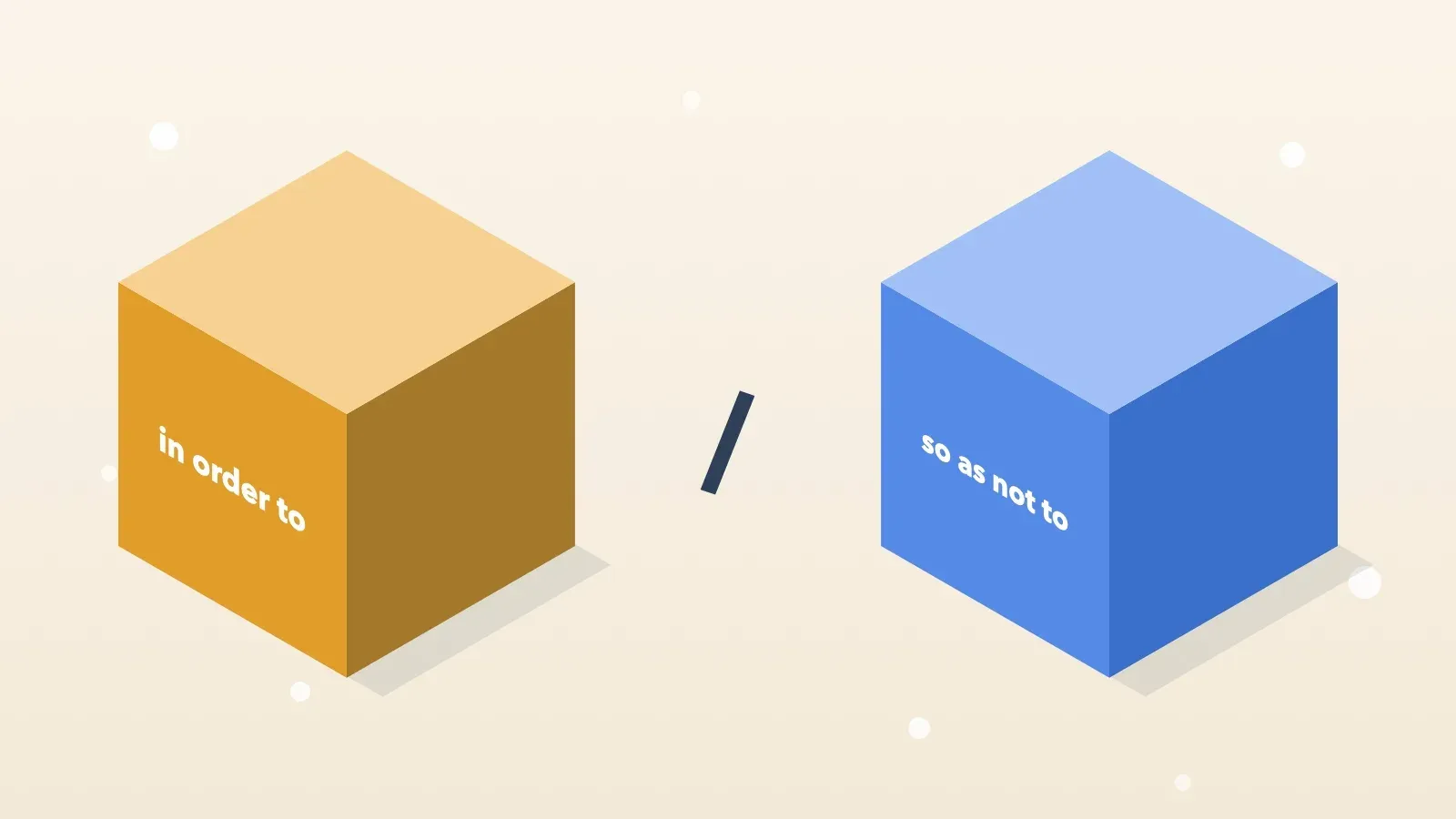
To, in order to and so that: what's it for?
 B2DrillsGrammar Practice · B2
No use, no point and worth + -ing: what's worth your time?
Try the gerund and infinitive exercises
One exercise from each of 6 lessons. These are the same exercises your students do in edio.
Gerunds and infinitives explained
We need gerunds and infinitives after verbs like enjoy or want, after prepositions and to say why. Enjoy, don't mind, avoid and suggest take -ing; want, hope, decide and agree take to. After a preposition, always use -ing: instead of typing. To + verb also gives a reason: Kids go there to learn music.
Like, love, enjoy, don't mind, hate + -ing
For how we feel about an activity, the second verb takes -ing: I love dancing, Marco hates practicing. Like, love and hate can also take to (I love to dance), but enjoy and don't mind only take -ing.
| Verb | It means… | Example |
|---|---|---|
| love ❤️❤️ | I like it a lot | I love dancing. |
| like ❤️ | it's nice | I like listening to jazz. |
| enjoy 😊 | it's fun for me | We enjoy clapping along. |
| don't mind 😐 | it's OK, not a problem | I don't mind waiting. |
| hate 😖 | I don't like it at all | Marco hates practicing. |
From the lesson Where jazz was born (English A2.1)
To + verb for purpose: why?
To + the base form gives the reason for an action: I play the violin to relax. Before a noun, use for instead: I came for a lesson, or I came to have a lesson. Never use both: for to learn is wrong.
to + verb
- Kids go there to learn music.
- I came to have a lesson.
- I play the violin to relax.
for + noun
- Kids go there for music lessons.
- I came for a lesson.
- I play the violin for fun.
From the lesson An orchestra for every kid (English A2.1)
Want, hope, decide, need + to
Want, hope, decide, try, plan, learn and need take to + the base form: We plan to drive to Stockton. Only the first verb changes for the person or the past (She wanted to fly); the verb after to stays the same.
| Verb | Example |
|---|---|
| want to | Marco wants to open a restaurant one day. |
| hope to | Ruben hopes to grow the best asparagus. |
| decide to | Yesterday, Nora decided to visit a farm. |
| try to | Biscuit tried to steal a tortilla. |
| plan to | We plan to drive to Stockton. |
| learn to | José learned to speak English at about twelve. |
| need to | You need to study hard. |
From the lesson Never give up: from farm fields to space (English A2.1)
Which form comes next? Check the word before it
Two groups to learn: want, need, would like and plan take to, while avoid, finish, suggest and keep take -ing. After any preposition, such as before, without or instead of, a verb takes -ing: She sends a file instead of typing the numbers.
| After these words | Use | Example |
|---|---|---|
| want, need, would like, plan, decide, hope, forget, try | to + verb | I want to export my payments. |
| avoid, enjoy, finish, suggest, mind, keep, consider | verb-ing | Bruno keeps scrolling through old payments. |
| a preposition: instead of, before, after, by, without, about, of | verb-ing | She sends a file instead of typing the numbers. |
From the lesson As a user, I want… (English for IT B1)
Remember, forget, stop, try: two meanings
Some verbs change meaning with the form. Remember + -ing looks back at a memory, but remember to names a job still to do. We've stopped using plastic tape ends a habit, while Ryan stopped to answer a call means a pause for something else.
| Verb | + -ing | + to + verb |
|---|---|---|
| remember | a memory of the past: I remember meeting Lukas in Amsterdam. | a task you don't forget: Remember to send the minutes. |
| forget | a past moment, usually with never: I'll never forget opening our first café. | a task you didn't do: Sorry, I forgot to book the room. |
| stop | end an activity: We've stopped using plastic tape. | pause in order to do something: Ryan stopped to answer a call. |
| try | do it as an experiment: Ana tried roasting the Kenyan coffee a little longer. | make an effort that is hard or fails: He tried to open the door, but it was stuck. |
From the lesson Running a Meeting (Business English B2)
Questions about gerunds and infinitives
What's the difference between a gerund and an infinitive?
Which verbs are followed by a gerund?
Which verbs are followed by an infinitive?
Which verbs take both a gerund and an infinitive?
Why do we say look forward to seeing you?
What is the infinitive of purpose?
How do I teach gerunds and infinitives in ESL classes?
What are good activities for gerunds and infinitives?
Are there interactive gerund and infinitive exercises?
Can I set these lessons as homework?
More English grammar
Lessons for every grammar point, from the verb to be to reported speech. All grammar points