Word formation: ESL lesson plans and exercises
Levels B2 to C1 5 lesson plans · 1 drill lesson Exercises that check themselves
Word formation is how English makes new words from ones learners already know: spell becomes misspell, afford becomes unaffordable, deep becomes depth and come back becomes a comeback. This page collects 5 ready-made word formation lessons for B2 learners from the edio.ai library, all in American English. Play exercises from them, see the patterns in their grammar schemes, and choose a lesson from the list. Every lesson is interactive, with practice exercises that check themselves and a speaking chapter.
Word formation lesson plans and drills
5 lesson plans and 1 drill lesson, B2 to C1. Lesson plans are whole lessons with reading, listening and speaking; drill lessons are 46 self-checking exercises with no new words.
 B2Lesson planEnglish B2.1
Why do Americans write “color”?
 B2Lesson planEnglish B2.1
A walk on the ocean floor
 B2Lesson planEnglish B2.1
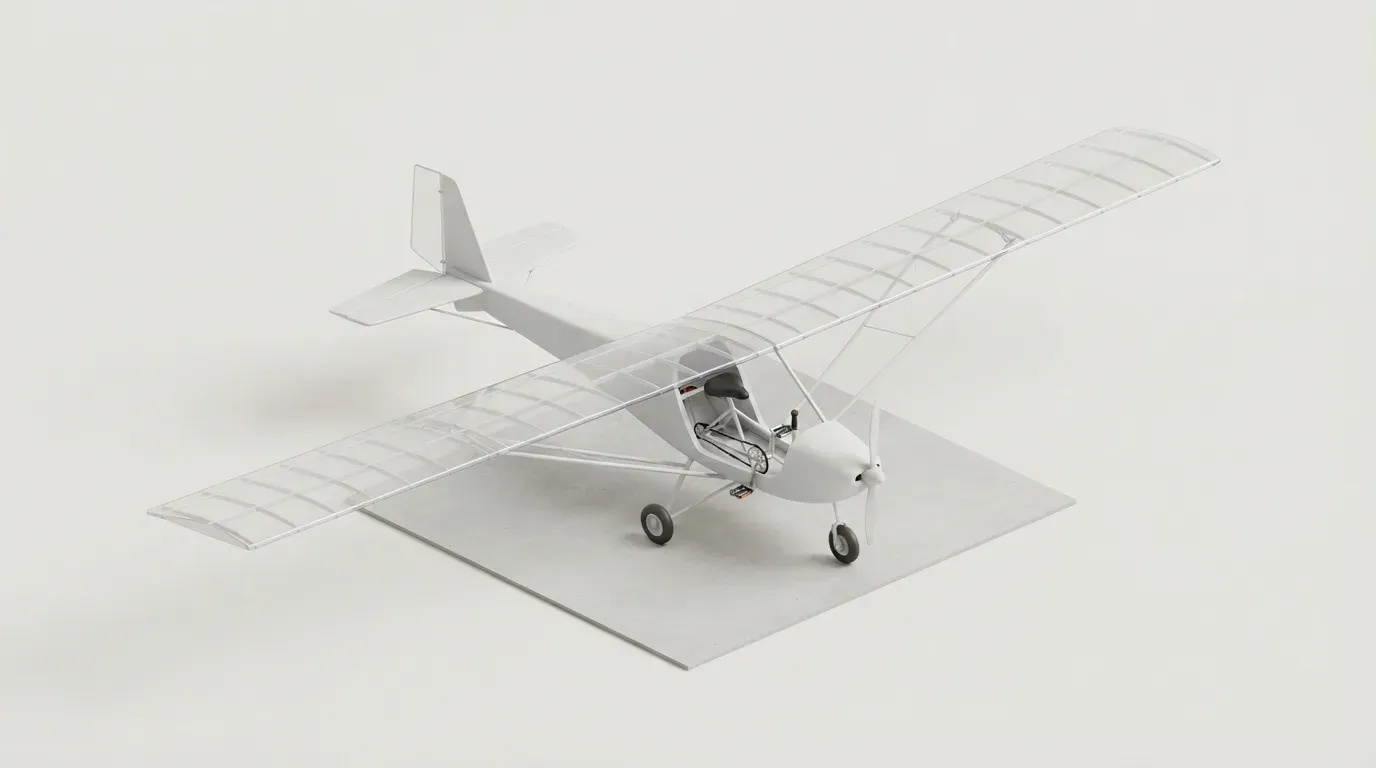
Flying on pedal power
 B2Lesson planEnglish B2.2
College for farmers' kids?
 B2Lesson planEnglish B2.2
The comeback of Jim Thorpe
 C1DrillsGrammar Practice · C1
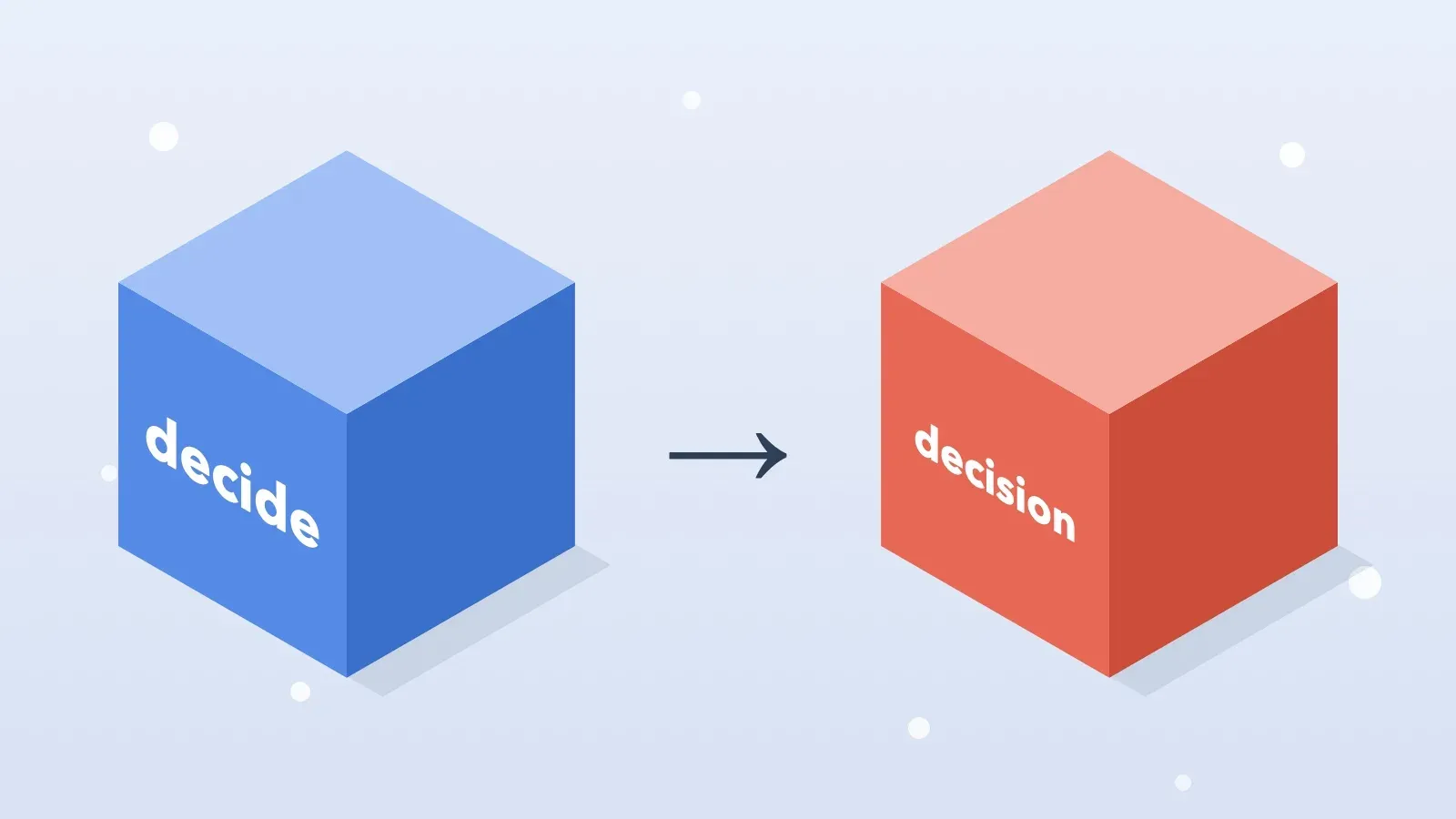
Nominalization: from “sales fell” to “a fall in sales”
Try the word formation exercises
One exercise from each of 6 lessons. These are the same exercises your students do in edio.
Word formation explained
Word formation helps learners guess a new word from its parts and pick the form a sentence needs: a verb, an adjective, its opposite or a noun. A prefix usually changes the meaning (read → misread), while a suffix usually changes the part of speech (wide → widen). Joining words gives compound adjectives such as a 70-pound plane, and phrasal verbs give one-word nouns such as a setback.
Prefixes and suffixes that make verbs
A prefix keeps the verb but changes its meaning: mis- means wrongly, re- again, over- too much and under- not enough. The suffixes -ize, -ify and -en mean make it, and build verbs from adjectives or nouns: modernize, simplify, shorten.
Prefixes: the same verb, a new meaning
| Prefix | Meaning | Verbs | For example |
|---|---|---|---|
| mis- | wrongly | misspell, misunderstand, misread, mispronounce, mishear | misspell a name |
| re- | again | rewrite, reread, reopen, redo, rebuild | rewrite a headline |
| over- | too much, too long | overuse, overcook, oversleep, overestimate | overuse a word |
| under- | not enough, too little | underestimate, undercook, underuse | underestimate a job |
Suffixes: a new verb from an adjective or a noun
| Suffix | Meaning | Word → verb |
|---|---|---|
| -ize | make it … | standard → standardize, modern → modernize, popular → popularize |
| -ify | make it … | simple → simplify, clear → clarify, pure → purify |
| -en | make it (more) … | short → shorten, wide → widen, weak → weaken, strength → strengthen |
From the lesson Why do Americans write “color”? (English B2.1)
Adjective suffixes, then a negative prefix
Suffixes such as -able, -ful, -less and -ous turn a verb or a noun into an adjective, and a prefix makes its opposite: afford → affordable → unaffordable. Un- is the most common, and im-, il- and ir- are forms of in-: impossible, illegal, irregular.
Suffixes: from a verb or noun to an adjective
| Suffix | It often means… | Examples |
|---|---|---|
| -able / -ible | can be done | afford → affordable, rely → reliable, access → accessible |
| -al | connected with | practice → practical, agriculture → agricultural, nation → national |
| -ful | full of, with a lot of | help → helpful, care → careful, beauty → beautiful |
| -less | without | care → careless, use → useless, speech → speechless |
| -ive | doing or tending to do | create → creative, attract → attractive, exclude → exclusive |
| -ous | full of, having | danger → dangerous, fame → famous, mystery → mysterious |
Negative prefixes: the opposite
| Prefix | When? | Examples |
|---|---|---|
| un- | the most common one | unaffordable, unusable, unfair, unusual |
| in- | with many words: learn them | inaccessible, inexpensive, incorrect |
| im- | before m and p | impossible, impractical, impatient |
| il- | before l | illegal, illogical |
| ir- | before r | irregular, irresponsible, irreplaceable |
| dis- | with some words: learn them | dishonest, disloyal, disrespectful |
From the lesson College for farmers' kids? (English B2.2)
Nouns from adjectives: depth, width, height
Size adjectives have noun partners: deep → depth, wide → width, long → length, thick → thickness. The adjective follows a number (twelve feet deep), while the noun often comes with of or in: a depth of twelve feet, ten feet in width.
| Adjective / verb | Noun | With the adjective or verb | With the noun |
|---|---|---|---|
| deep | depth | The pool is twelve feet deep. | The pool has a depth of twelve feet. |
| wide | width | The boat is ten feet wide. | It's ten feet in width. |
| high / tall | height | The coral was about five feet tall. | It was about five feet in height. |
| long | length | The sharks were 18 inches long. | They were 18 inches in length. |
| thick | thickness | The glass is three inches thick. | It has a thickness of three inches. |
| weigh (a verb) | weight | The tank weighs 35 pounds. | Its weight is 35 pounds. |
From the lesson A walk on the ocean floor (English B2.1)
Compound adjectives with numbers and participles
Before a noun, two or three hyphenated words work as one adjective, and a number compound has no plural -s: a 70-pound plane. A past participle gives a passive meaning (a human-powered plane), and -ing an active one (a record-breaking flight).
Number + noun: one adjective, no -s
| Before a noun | The same idea in a sentence |
|---|---|
| a 70-pound plane | The plane weighed 70 pounds. |
| a 96-foot wingspan | The wings measured 96 feet from tip to tip. |
| a 21-year-old student | The student is 21 years old. |
| a two-day ride | The ride takes two days. |
| a 20-mile route | The route is 20 miles long. |
| a 27-minute film | The film lasts 27 minutes. |
Participles: -ed (passive) or -ing (active)
| Pattern | Examples | Meaning |
|---|---|---|
| noun + past participle | a human-powered plane, a solar-powered boat, a hand-built canoe | passive meaning: it is powered by a human or by the sun; it was built by hand |
| well + past participle | a well-known pilot, a well-designed wing, a well-trained racer | passive meaning: many people know her; someone designed it well |
| noun + -ing | a record-breaking flight, an energy-saving design | active meaning: it breaks a record; it saves energy |
| long / slow / hard + -ing | a long-lasting battery, a slow-moving plane, a hard-working team | active meaning: it lasts a long time; it moves slowly; they work hard |
From the lesson Flying on pedal power (English B2.1)
Nouns from phrasal verbs: comeback, setback, outcome
Many phrasal verbs have a one-word noun partner: come back → a comeback, break down → a breakdown. The particle usually stays last, but a few nouns put it first: come out → the outcome, bring up → upbringing.
The particle goes last
| Phrasal verb | Noun | Example |
|---|---|---|
| come back | a comeback (a return to success) | Thorpe's comeback in the record books took 110 years. |
| set back | a setback (a problem that slows you down) | Losing his titles was a huge setback. |
| break through | a breakthrough (a big step forward) | The breakthrough came in 2022. |
| turn out (come to an event) | the turnout (how many people came) | The turnout for the opening was high. |
| line up | a lineup (the players or events, in order) | The coach changed the starting lineup. |
| take off | takeoff (a plane leaving the ground) | Please stay in your seat during takeoff. |
| break down | a breakdown (a machine stops working) | Our bus had a breakdown on the highway. |
The particle goes first
| Phrasal verb | Noun | Example |
|---|---|---|
| come out (how things end) | the outcome (the final result) | The outcome: Thorpe is the sole champion. |
| bring up (raise a child) | upbringing (the way you were raised) | She had a happy upbringing on a farm. |
From the lesson The comeback of Jim Thorpe (English B2.2)
Questions about word formation
What is word formation in English?
What are prefixes and suffixes?
Which negative prefix do you use: un-, in-, im-, il-, ir- or dis-?
What are adjective suffixes?
What are compound adjectives?
What is nominalization?
How do I teach word formation to B2 students?
What are good word formation games and activities?
Are there interactive word formation exercises?
Can I use these word formation lessons one-to-one or as homework?
More English grammar
Lessons for every grammar point, from the verb to be to reported speech. All grammar points