Past simple: ESL lesson plans and exercises
Levels A1 to B2 15 lesson plans · 7 drill lessons Exercises that check themselves
The past simple is the first past tense English learners meet, for actions and states that are over: we traveled, she went, Did you call? Here are 15 ready-made past simple lessons from the edio.ai library, levels A1 to B2, all interactive and in American English. Play some of their exercises, study each rule in the lessons' own grammar schemes, and pick a lesson by level, from was and were to irregular verbs and questions with did. Students do the drills in their own accounts, and every drill checks itself.
Past simple lesson plans and drills
15 lesson plans and 7 drill lessons, A1 to B2. Lesson plans are whole lessons with reading, listening and speaking; drill lessons are 44 to 46 self-checking exercises with no new words.
 A1Lesson planEnglish A1.2
Why do we have two days off?
 A1DrillsGrammar Practice · A1
Was and were: where were you yesterday?
 A2Lesson planEnglish A2.1
Around the world in 72 days
 A2Lesson planEnglish A2.1
The first drive across America
 A2Lesson planEnglish A2.1
Get your kicks on Route 66
 A2Lesson planEnglish A2.1
A real bug in the computer
 A2Lesson planEnglish A2.1
“Mr. Watson, come here”
 A2Lesson planEnglish A2.2
Have you been to the Grand Canyon?
 A2Lesson planEnglish A2.2
The man who planted apple trees
 A2DrillsGrammar Practice · A2
Past simple with -ed: moving day!
 A2DrillsGrammar Practice · A2
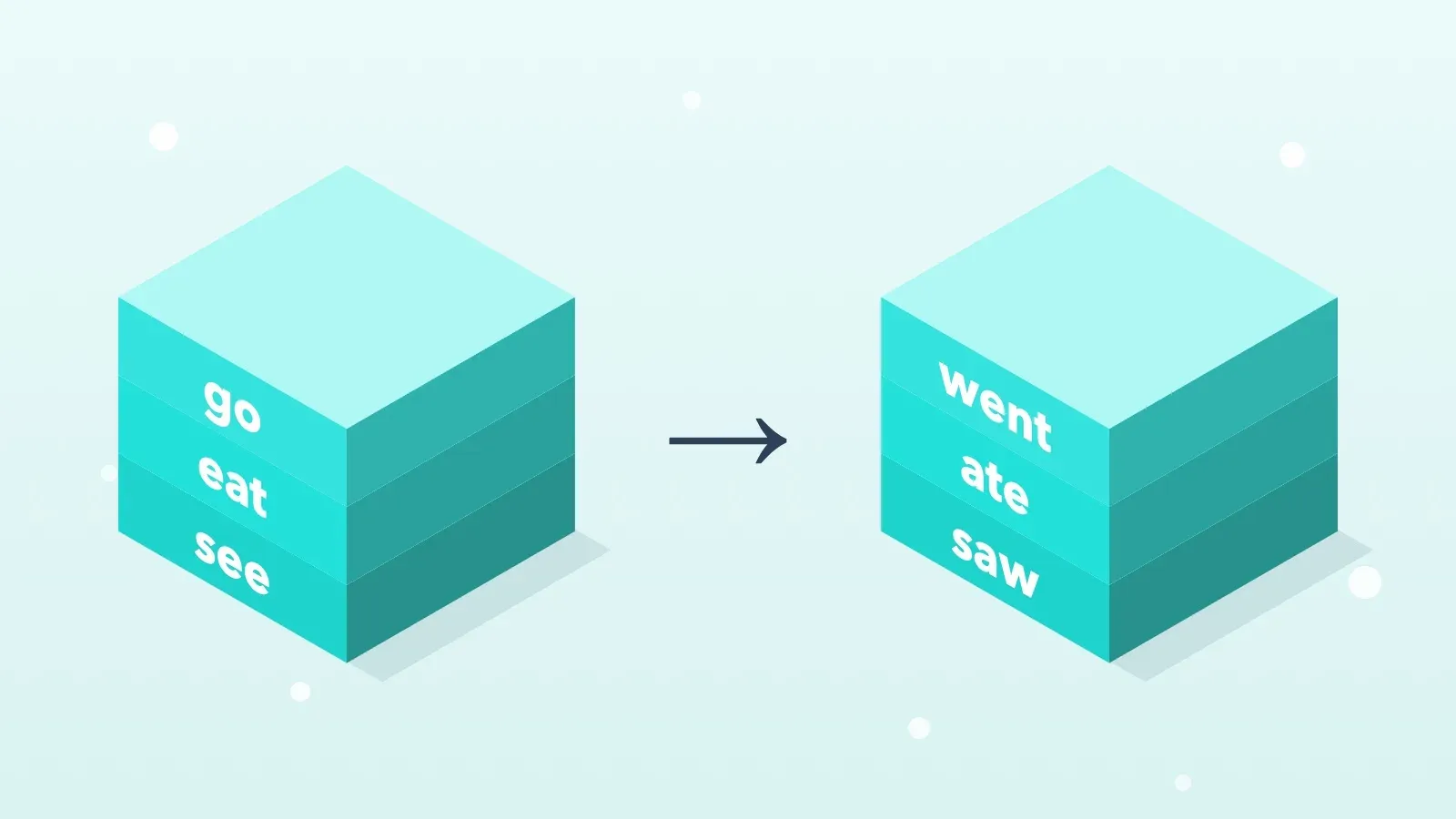
Past simple irregular verbs: we went, we saw, we bought
 A2DrillsGrammar Practice · A2
Past simple negatives and questions: where did the cake go?
 A2DrillsGrammar Practice · A2
Past simple or past continuous: what were you doing when it happened?
 A2DrillsGrammar Practice · A2
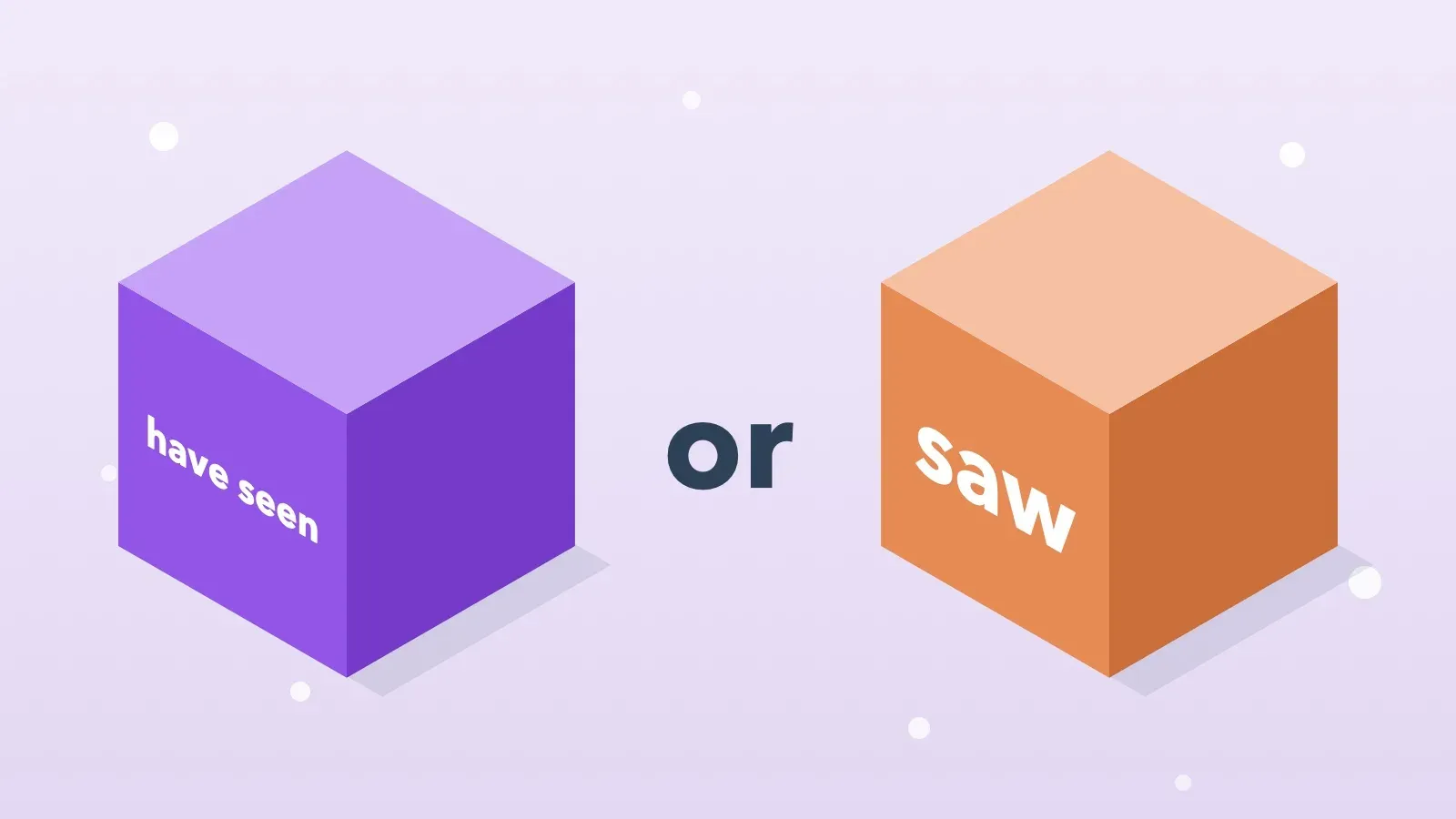
Present perfect or past simple: up to now or finished time?
 B1Lesson planEnglish B1 · Hot Topics
GTA 6: worth the wait?
 B1Lesson planEnglish B1.1
Would you visit an airport just for fun?
 B1Lesson planEnglish B1.2
What should you do at a powwow?
 B1Lesson planEnglish for IT B1
Done, not done yet
 B1Lesson planEnglish for IT B1
The first actual bug
 B1DrillsGrammar Practice · B1
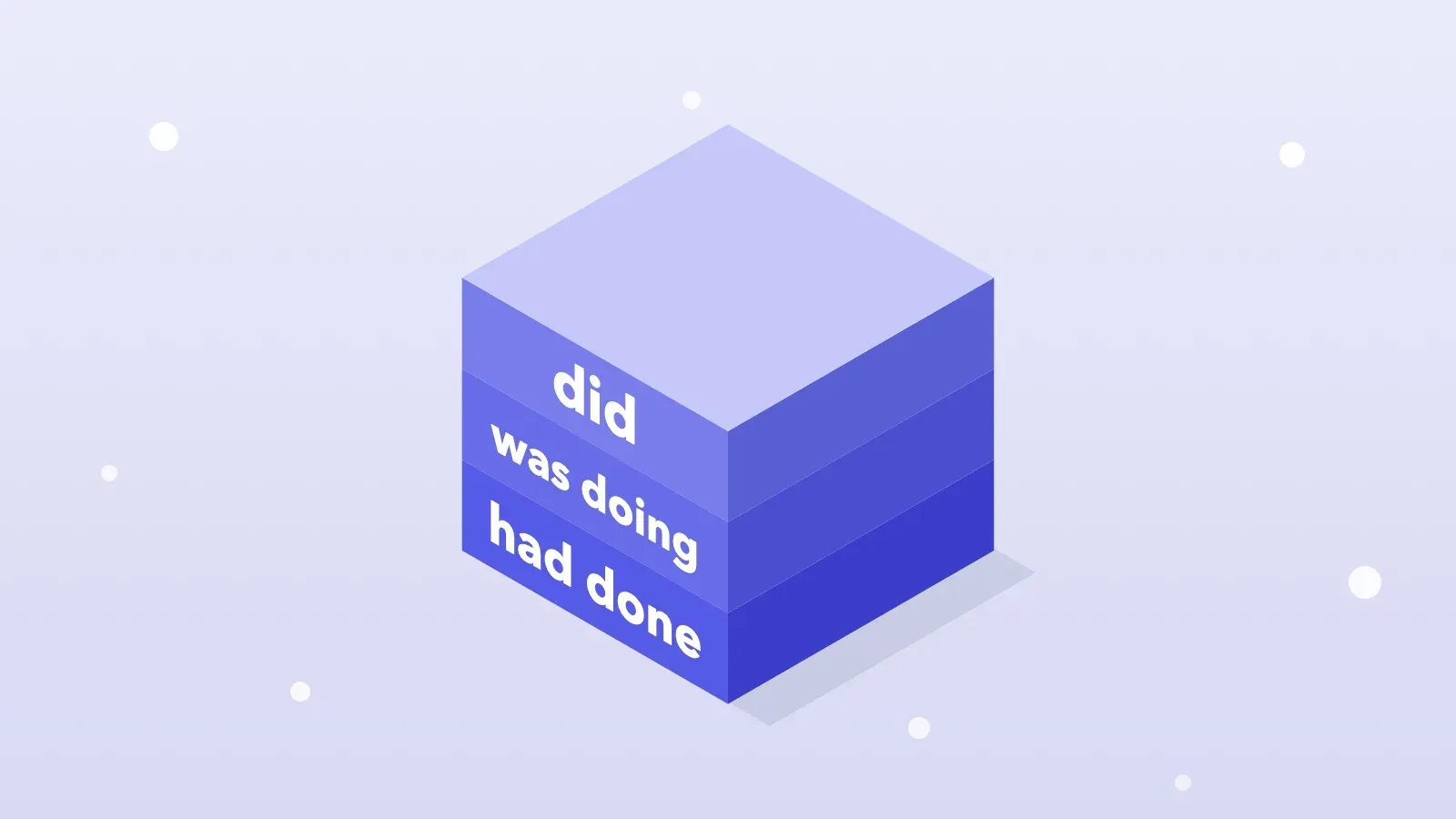
Narrative tenses: telling a great story
 B2Lesson planBusiness English B2
Our Story: From Cart to Roastery
 B2Lesson planEnglish B2.1
Checkmate: the day a computer beat the champion
Try the past simple exercises
One exercise from each of 6 lessons. These are the same exercises your students do in edio.
Past simple explained
We use the past simple for finished actions and states, often with a time word such as yesterday, last summer or in 1903, and for stories told event by event. Each verb has one past form for every person, except be: was and were. Other verbs form negatives and questions with did + the base form.
Was and were: the past of be
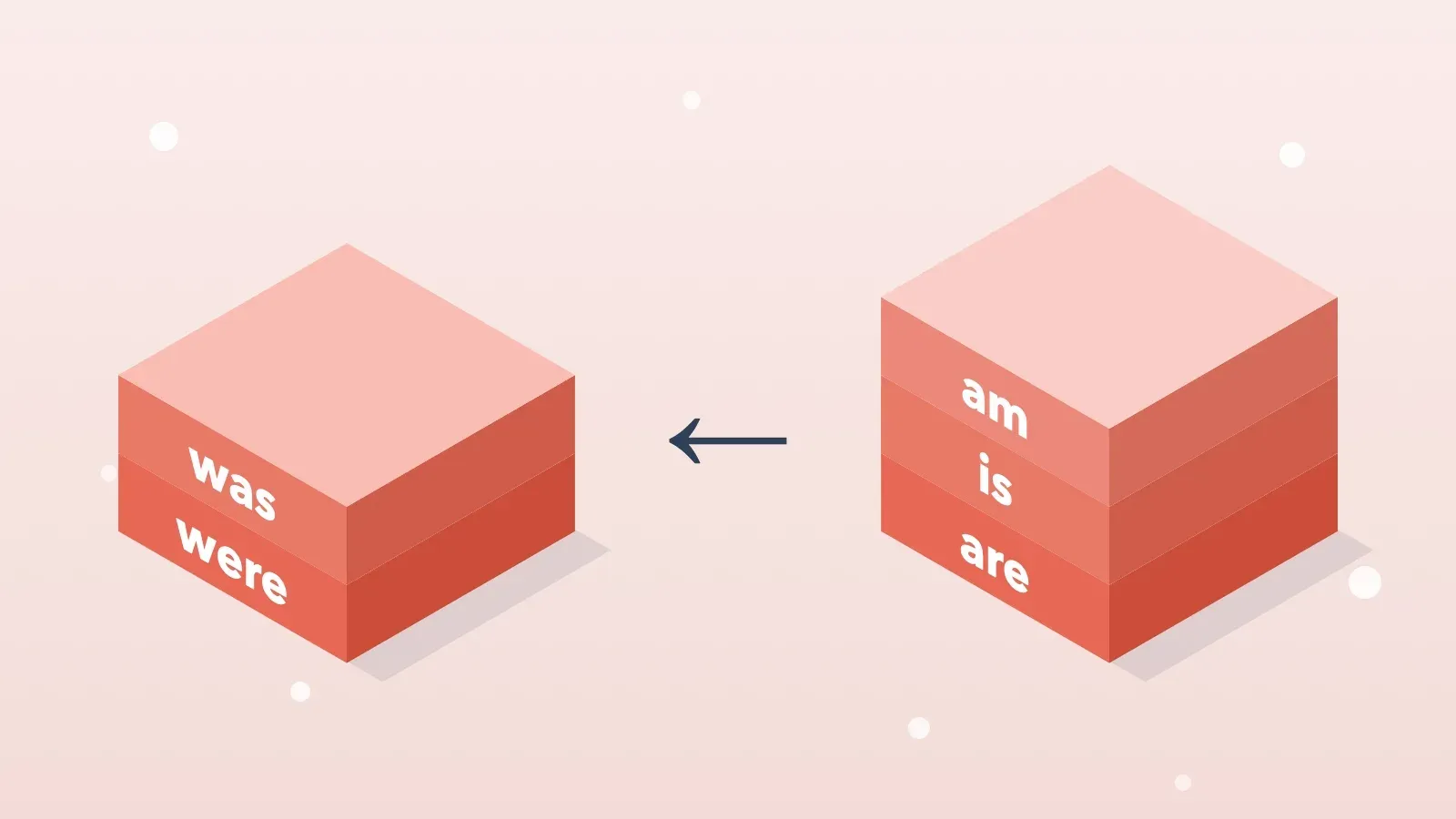
Am and is both become was, and are becomes were. That gives I was, she was and it was, but you were, we were and they were: It was sunny, We were at the beach.
| Who | Now | In the past |
|---|---|---|
| I | I am tired. | I was tired. |
| you | You are at home. | You were at home. |
| he, she, it | She is at the café. It is sunny. | She was at the café. It was sunny. |
| we | We are at the beach. | We were at the beach. |
| they | They are sleepy. | They were sleepy. |
From the lesson Why do we have two days off? (English A1.2)
Regular verbs: -ed in writing and in speech
Most verbs add -ed, verbs ending in e add -d, and consonant + y becomes -ied: walked, arrived, carried. Short verbs like stop double the consonant, and American English writes traveled with one l. The ending sounds /t/, /d/ or /ɪd/.
Spelling: add -ed
| The verb | Add | Examples |
|---|---|---|
| most verbs | -ed | walk → walked, visit → visited |
| ends in e | only -d | arrive → arrived, explore → explored |
| consonant + y | y → -ied | carry → carried, study → studied, try → tried |
| vowel + y | -ed | play → played, stay → stayed |
| a short verb (one syllable): one vowel + one consonant | double the consonant + -ed | stop → stopped, grab → grabbed, plan → planned |
| travel | -ed, one l | travel → traveled |
Say it: three endings
| Sound | When? | Examples |
|---|---|---|
| /t/ | after p, k, s, sh, ch, f sounds | walked, stopped, packed, crossed, watched |
| /d/ | after other sounds (b, l, m, n, r, v, vowels…) | traveled, arrived, explored, played, grabbed |
| /ɪd/ (one more syllable) | after t or d | started, visited, wanted, waited, ended |
From the lesson Around the world in 72 days (English A2.1)
Irregular verbs: a past form of their own
Many everyday verbs change instead of adding -ed: go → went, take → took, buy → bought. Each one has to be learned: went, never goed. Like all past forms, it fits every person, so he went, not he wents.
| Base form | Past | Example |
|---|---|---|
| drive | drove | Jackson drove across America. |
| leave | left | They left San Francisco in May. |
| take | took | The trip took 63 days. |
| break | broke | Big Blue broke down. |
| get | got | They got lost. |
| go | went | Bud went to New York. |
| come | came | A stranger came and helped. |
| have | had | The car had no roof. |
| see | saw | Marco saw the old car. |
| buy | bought | Jackson bought goggles for Bud. |
| eat | ate | Biscuit ate Marco's sandwich. |
| find | found | Nora found a mechanic. |
From the lesson The first drive across America (English A2.1)
Negatives: didn't + the base form
Didn't already shows the past, so the verb after it goes back to the base form, regular or irregular: We didn't stop, They didn't have GPS. Watch for didn't stopped and didn't went.
The past simple: no
I / you / he / she / it / we / theydidn't (= did not)base form
We didn't stop for lunch.
Big Blue didn't break down.
In 1966, they didn't have GPS.
Regular and irregular: one rule
Regular verbs (-ed)
- stopped → didn't stop
- missed → didn't miss
- rained → didn't rain
Irregular verbs
- drove → didn't drive
- had → didn't have
- went → didn't go
From the lesson Get your kicks on Route 66 (English A2.1)
Questions: Did…? for most verbs, Was…? for be
Yes/no questions open with Did + the base form: Did Edison use the word “bug”? The short answer is just Yes, he did or No, he didn't. The verb be needs no did: Was it a real bug?
Other verbs: Did + base form
- Did Edison use the word “bug”? – Yes, he did.
- Did the Mark II stay at Harvard? – No, it didn't.
be: Was / Were, no did
- Was it a real bug? – Yes, it was.
- Were the engineers at Harvard? – Yes, they were.
From the lesson A real bug in the computer (English A2.1)
Past simple or present perfect?
A finished time, stated or obvious, takes the past simple: Claire set up Wrenfield in 2012. So does a story told step by step. The present perfect is for experience, present results and periods still going on: We've had a partner since last year.
| Use | Time words | Example |
|---|---|---|
| Past simple: a finished time, said or clear | in 2012, last year, three weeks ago, when I was…, yesterday | Claire set up Wrenfield in 2012. |
| Past simple: a story, step by step | then, after that, soon, a year later | We moved into the warehouse and started roasting. |
| Present perfect: experience up to now, no time given | ever, never, before | Have you ever worked with hotels? |
| Present perfect: a past action with a result now | just, already, yet | The samples haven't arrived yet. |
| Present perfect: a period that is not over | since, for, so far, this week, How long…? | We've had a partner in Hamburg since last year. |
From the lesson Our Story: From Cart to Roastery (Business English B2)
Questions about the past simple
When do we use the past simple?
How do you form the past simple?
How do you pronounce the -ed ending?
What are irregular verbs in the past simple?
Is it the past simple or the simple past?
What's the difference between the past simple and the present perfect?
How do I teach the past simple to A2 students?
What are good past simple games and activities?
Are there interactive past simple exercises?
Can I use these lessons one-to-one or for homework?
More English grammar
Lessons for every grammar point, from the verb to be to reported speech. All grammar points